


On Friday morning, 30 January 2026, 1.5 million Kenyan households received a text message. "Samahani KOKO customer," it read. "We regret to inform you KOKO is closing operations today."
One withheld government authorisation. One board decision. One morning. A model that had taken six years and $300 million to build, that had reached more households than many public programmes ever do, gone before the working day was over.
This is not only KOKO's story. It is the story of what happens when a frugal business model depends on a public policy instrument, in KOKO's case, a government authorisation to sell carbon credits, to reach people who cannot pay the market price. It works, sometimes remarkably well, until the conditions that allowed it to work shift. And then the people it was serving are left holding the gap again.
Elsie Onsongo, Director of Nuvoni Centre for Innovation Research in Nairobi, had studied KOKO and knew the logic behind it. When she brought it into the VOICE session on Monday, six months after the collapse, she used it not as a cautionary tale but as the sharpest possible version of the question she wanted the group to sit with all afternoon.
Every frugal business model creates something valuable. It also has to capture enough value to survive. The gap between those two things is where models succeed or fail. And in Kenya, that gap keeps opening up in the same place: where government stopped showing up.
Who Makes the Money?
Before the cases, before the framework, Elsie opened with a question.
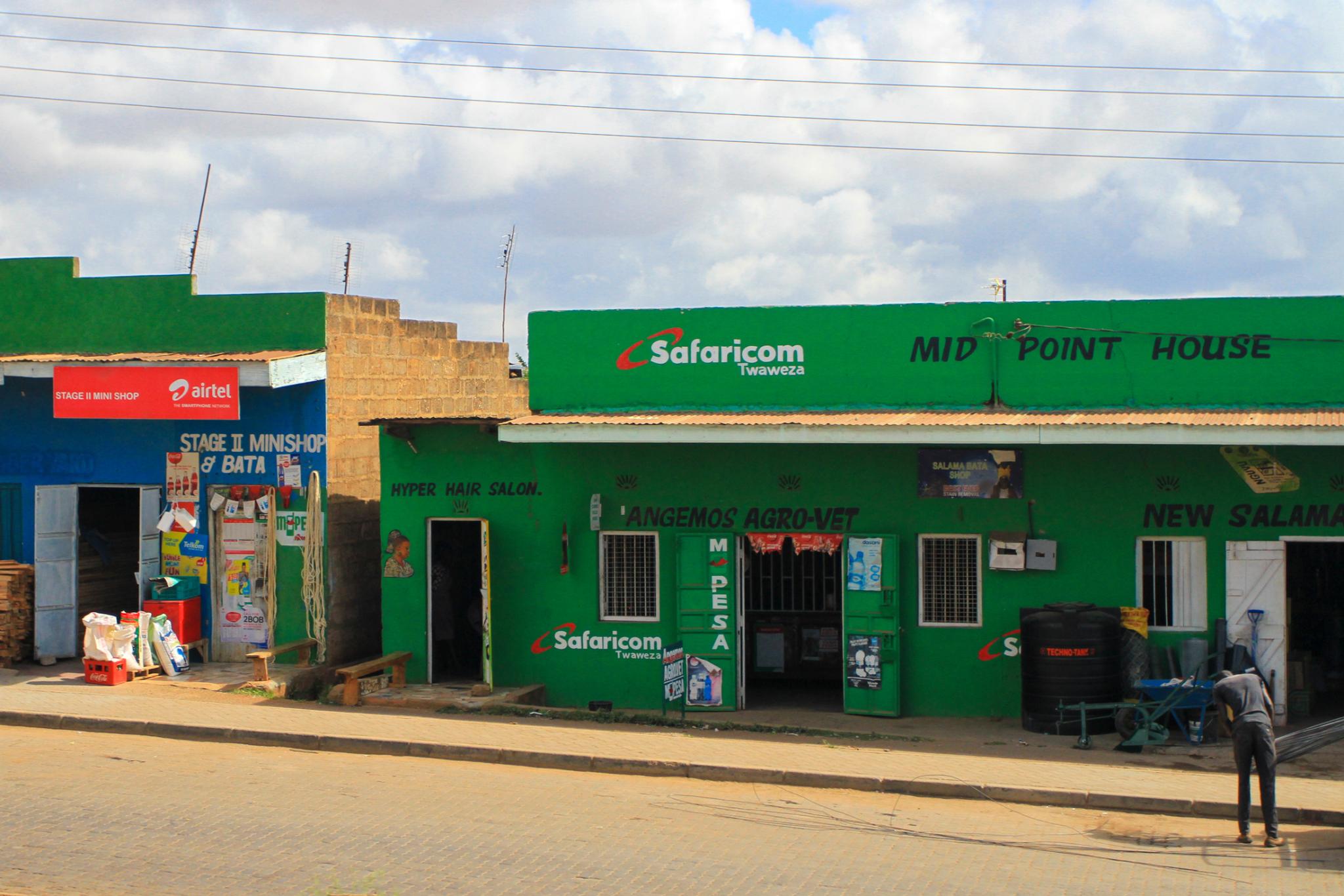
She showed the group a photo: a woman in a colourful dress withdrawing money from an M-Pesa agent, who sits behind a kiosk of green metal mesh and steel bars. The bars are not decorative. Agents keep cash on hand, and they get robbed. Sometimes at gunpoint, sometimes on camera, sometimes both.
Who makes money on M-Pesa, she asked, and who carries the risk?
The chat filled up immediately. The telecom (Safaricom) makes the money. The tax collector makes the money. Agents carry the risk. Users absorb the fraud and the fees.
A participant from Ghana recognised the setup: same dynamic, different country. The mobile network operator takes the value, the government takes the taxes, agents and customers carry the risk. Moses Mwangi, who teaches at South Eastern Kenya University and was co-facilitating the session, went further. The Kenyan government adds new taxes on M-Pesa transactions every year while doing almost nothing to protect the people using the system. Someone, he said, is making money out of nothing.
Elsie confirmed it and made it personal. She had lost money through M-Pesa fraud. Getting it back from Safaricom was so bureaucratic that she gave up. The transaction fees had already been collected.
M-Pesa reached 85% financial inclusion in Kenya, up from 27% in 2006. That is real. But Safaricom captures most of the value, and around 19% of Kenyans in remote areas are still not reached. Elsie's point was not that M-Pesa had failed. It was that reaching 85% of people and keeping the value yourself are not in tension. They are outcomes of the same design.
The Gap and Who Falls Into It
Elsie laid out the framework she would use for every case that followed. Every frugal model creates something: access to electricity, clean cooking fuel, a toilet in a neighbourhood that has none. But it also has to earn enough to survive. The gap between those two things is where most models run into trouble. Sometimes they create more value than they can capture, and they run out of money. Sometimes they can only reach the people who can already afford something close to the market rate, which was not the point. And sometimes they capture value fine, but the people they were meant to serve pay too much or are not reached at all.
The question Elsie kept returning to: who fills the gap between what people need and what they can pay for? In Kenya, the answer is increasingly not the government. Which means the gap gets filled by Safaricom, by Philips, by mini-grid developers, by tech platforms, by carbon markets. Each of those fills it differently. Each leaves a different set of people behind.
Five Cases, One Question
Elsie walked the group through five stories.
- Sanergy built prefabricated toilets in Nairobi's informal settlements: first as a franchise at $350 to $500 upfront, then as a residential service at around $8 a month, then it split into Fresh Life for the toilets and Regen Organics for the waste, which gets turned into fertiliser, biogas and insect protein. Now 6.000 toilets, 250.000 people served, fertiliser reaching 10.000 farmers. The real value turned out to be in what happened to the waste, not in the toilets themselves. It took years of losses and multiple reinventions to get there.
- Philips upgraded government clinics with solar power, LED lighting, medical equipment and training under what it called Community Life Centres. One centre in Mandera serves 40.000 people. But primary healthcare in Kenya is supposed to be free, and Philips introduced a user fee, which brought controversy. The model relied on donor funding. When Elsie checked before the session: no new centres are being built. Philips now funds others to run the facilities rather than investing directly. The programme has not ended, but retreated, and what that leaves behind is a question about who was ever actually in charge.
- Mini-grids bring solar electricity to places the national grid will not reach. High upfront capital, low revenue because most households can only afford lighting and phone charging. The tariff is roughly five times what urban households pay Kenya Power, paid by the poorest rural communities. The model only works with anchor customers, subsidies or grant funding. And if the national grid eventually arrives, the developer loses the investment.
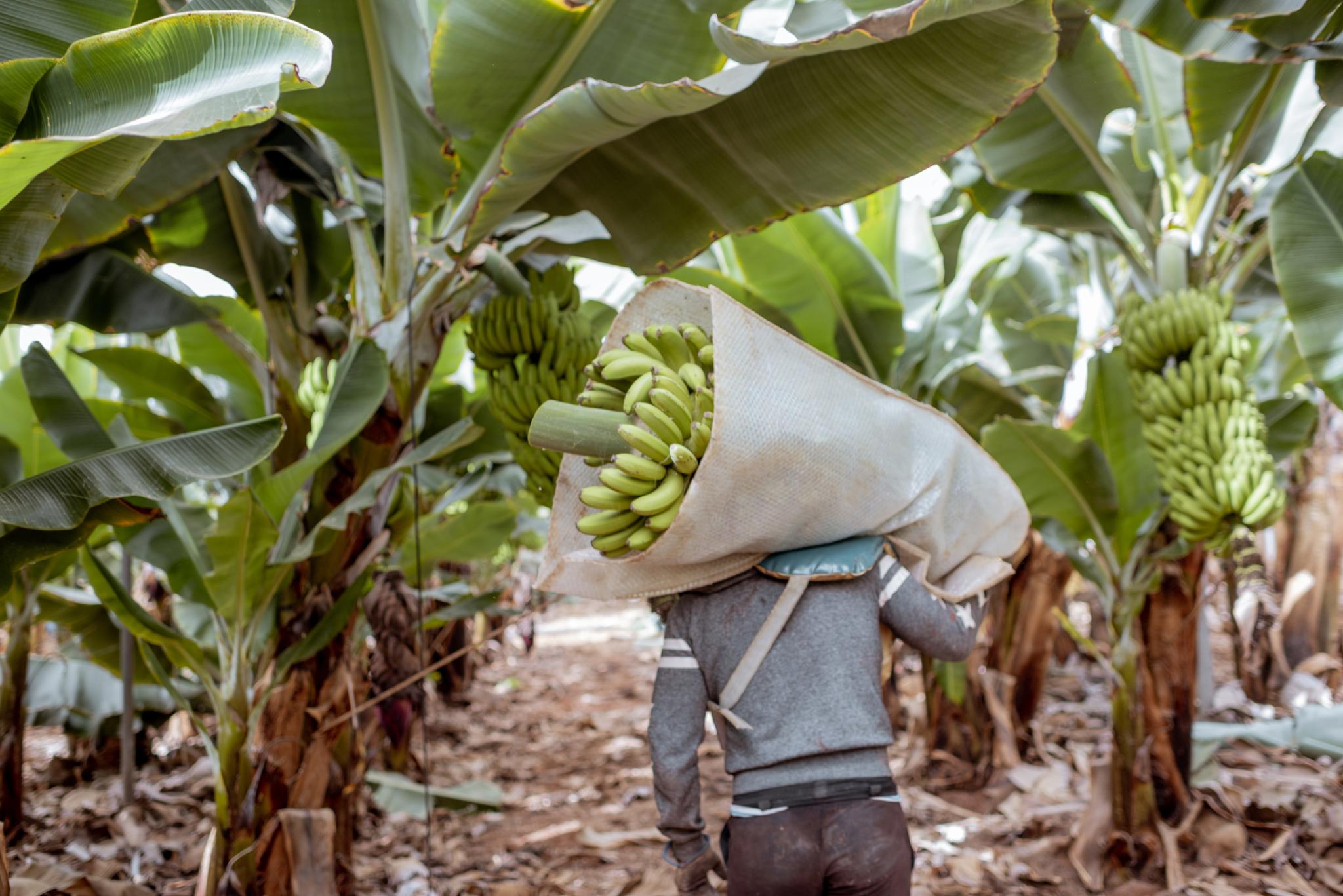
Twiga Foods set out to fix something real. An example: in Kenya, a banana grown by a smallholder farmer passes through four or five middlemen before it reaches a shop in Nairobi. Each one takes a cut. The farmer has no way to know how much of the final price actually reaches them. Twiga's idea was to replace all those middlemen with an app. Farmers list their produce, small retailers order it, Twiga handles the logistics. It raised over $100 million to build that out, then realised it could not sustain the warehouses and lorries at scale, sold the assets, and repositioned as a technology company that connects buyers and sellers without owning any of the middle. It has not found a profitable model yet, and the restructuring came at a cost: repeated layoffs, the founder's departure, and a two-month pause of Nairobi operations.
Elsie's phrase for what Twiga had ended up building: it cannibalises the value chain. It set out to cut out the middlemen and became one itself, just a digital one. The farmers at one end still have no idea what is happening to their prices.
The Fifth Case: The Model That Collapsed
KOKO Networks was last, and Elsie had saved it deliberately.
Bioethanol burns cleaner than charcoal or kerosene, but low-income households cannot afford it at market price. So KOKO subsidised the price through carbon credits: every household that switched from charcoal to bioethanol reduced emissions. KOKO sold those reductions as carbon credits to companies in the Global North that wanted to offset their own pollution. Stoves sold for around 1.500 shillings instead of 13.000. Fuel at half the market rate. Over 3.000 smart dispensers in neighbourhood shops. 1.5 million households switched.
The model worked.
It rested on one thing: a letter of authorisation from the Kenyan government, allowing KOKO to sell its credits internationally under the Paris Agreement. The company had been waiting for that letter throughout 2025, alongside import permits for the molasses-based ethanol it depended on. In January 2026, the government declined to issue the authorisation.
The official reason: KOKO's 6 million credits a year would have consumed Kenya's entire allowable share of internationally transferable credits under the Paris Agreement, crowding out every other Kenyan company that might want to sell into the same market. There were also questions about whether KOKO had been doing the carbon accounting correctly.
After two days of meetings at the Nairobi offices, executives pulled the plug. Not gradually. The text messages went out the same morning, all 700 staff were laid off, and the company filed for insolvency the following day.
During the session, a participant asked what had actually driven the refusal. Elsie shifted the frame: it is not whether the government was right or wrong, she said. The question that matters is whether a profit-making company can build a business model that rests entirely on subsidies; subsidies that exist only because a government allows them to. A model that stands or falls on who holds power. She did not offer a simple answer.
Moses pushed it further. There has been public debate about whether current-regime interests in LPG played a role. KOKO was displacing LPG. The costs and usability were comparable. Whether the refusal was connected to those interests is not confirmed, he said, but it is not a conspiracy theory either. Governments introduce taxes on solar just as it starts to take hold. Gulf states pump money into markets to protect oil. The geopolitics of energy does not stop at the borders of frugal innovation. It is the room frugal innovation has to operate in.
And on the narrative that 1.5 million households had now fallen back to charcoal: Elsie had checked. Most had switched to LPG. Which raises its own question about what KOKO actually achieved in the long run, and who ended up benefiting from where the market settled.
The Question Nobody Could Answer
With five cases on the table and not enough time for all of them, the group chose three: KOKO, Philips and Twiga. Each group took one case, spent twenty-five minutes on it, and returned with three lines: who pays, who carries the risk, who keeps the value. Plus one parallel from their own country or context. The groups came back with more than could fit in one afternoon.
A participant from the Philips group asked the question the case had made unavoidable: are there examples, anywhere, of market-based models that actually fixed the underlying problem rather than patching it? Not a model that worked for a while, but one that genuinely jumpstarted a public system and then handed it over?
She could not think of one. Elsie could only name a comparable franchise healthcare model in Kenya that had also tried and also collapsed.
That opened something Elsie wanted to address. The idea that markets can solve access to basic needs traces back to Prahalad's The Fortune at the Bottom of the Pyramid, which argued that private sector innovation could reach the people governments had not. Frugal innovation grew out of that tradition. And the question that tradition has never fully answered, she said, is whether frugal innovations are genuinely solving the problem or just managing it until government does what it is supposed to do.
A participant pushed back, not on the diagnosis but on what it implied about motive. Partnerships are simply hard to build, she said. When capital is too available, companies skip the hard work. Twiga did not fail because it wanted profit instead of inclusion. It failed because it did not do the right equation from the start. If profit had genuinely been the priority, it would have gone straight to partnerships, because the partnerships are what make the economics work. Market-based and frugal are not mutually exclusive. Sanergy showed that.
Elsie closed by pointing back to M-Pesa. It started with enormous effort to build the agent network and the relationships with small enterprises, she said, and the whole infrastructure rests on those partnerships now. That is why it is still growing, despite all the questions about who carries the risk. Building those partnerships from the start, she said, is what makes the difference.
A Design Choice
"Who keeps the value is a design choice," Elsie had said during her presentation. By the end of the session it meant something different than when she first said it. Not advice for innovators. A description of how power works: built into the revenue model, the partnership structure, the question of whose risk is whose.
The five cases showed five different answers. Safaricom keeps the value in M-Pesa. Philips never fully resolved how to capture enough value to sustain it. Mini-grid developers keep it only if subsidies close the gap. Twiga is still looking for it. And in KOKO, when the model broke, nobody kept anything.
None resolved the underlying question. All five were operating in the same gap: the space between what people need and what governments provide. Filling that gap with market-based innovation does not make it disappear. It just changes who decides how long they stay, and on what terms.
On the morning of 30 January, 1.5 million households learned that answer the hard way. One text message, and the gap was open again.