


Domain Group: Agriculture
Over eight weeks, VOICE brought together master students and practitioners from across the Global North and South to explore frugal and bottom-up innovation. As part of the programme, participants learned to write for a wider audience: getting an idea across quickly, clearly, and in their own voice. The blog below is the result, grounded in local conversations and shaped through weeks of collaborative writing.
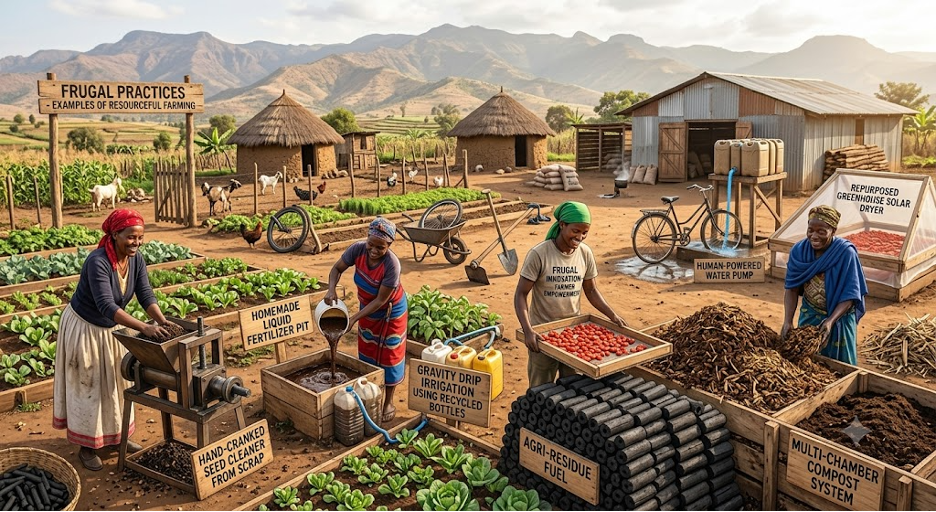
Frugality within Agriculture:
Thousands of farmers are applying the principles of frugality every day, innovating creatively to find solutions to their daily challenges. Yet those innovations remain largely invisible, despite growing attention given to frugal innovation in academic and development circles. And even beyond this, weekly flash ethnographies conducted by the ‘Agriculture’ Group of the VOICE workshop discovered an interesting contradiction: smallholder farmers are inventing frugal innovations on a daily basis, whilst being unfamiliar with the academic concept itself. The following blog post therefore aims to uncover some of these frugal solutions, documents them, and connects them to the world - to transform local ideas into shared knowledge that improves agriculture globally. We believe every farmer is an innovator and every innovation deserves a VOICE.
How frugality and frugal innovation is (not-)understood by the people
Doing more with less, particularly in resource-constrained settings and among vulnerable populations such as smallholder farmers, lies at the heart of Frugal Innovation (FI) ]. Frugal innovation is founded on the principles of creating accessible, affordable, resource-efficient, and sustainable solutions that address local challenges using the resources already available. This is more effective than depending on sophisticated technologies or large financial investments. Frugal innovation demonstrates that creativity, local knowledge, and resourcefulness can generate meaningful solutions with lasting social, economic, and environmental impact if done correctly.
How would you explain what frugal innovation means to a person you are talking to, if s/he never heard about frugal innovation?
Applying the concept of frugality to the agricultural sphere, several questions arise. Particularly, the questions of what frugal innovation means to people that are so far unfamiliar with the concept, and what it signifies to small scale farmers are highly intriguing. How frugality and frugal innovation is (not-)understood by the people, is therefore the core of this blogpost.
To investigate how the principles of frugality are reflected locally on the ground, flash ethnographic conversations were held by the VOICE Agriculture group members with smallholder farmers, colleagues at work, academic staff, and fellow students. They aimed to examine how frugality and frugal innovations prevail in the farming systems of rural communities across different contexts with a particular focus on Africa and South America. Overall, they discovered a widespread unfamiliarity with the term frugal innovation, while finding that thousands of farmers are already applying its principles in their daily lives.
Evidently, most interviewees struggled to understand what frugal innovation precisely means and how it works. When we contextualized and elaborated its concept, people started to connect it to their experiences and opinions. Overall, the VOICE Agriculture group realized that people outside the disciplinary field of frugality lack awareness about what frugal innovation means. Herewith, multiple divergent interpretations by different people were uncovered during the flash ethnography. Most participants showed us several different agricultural innovations, however, they did not consider them as frugal innovations. One way to clarify what innovation can be viewed as a frugal one, is through Maria Alejandra Pineda-Escobar’s framework of how to identify relative and contextual frugal innovations.
In detail, amongst 20 people interviewed during the weekly ethnographic sessions, only 8 understood the concept of frugal innovations and were able to connect them to their local vicinity to identify frugal innovations there. While elaborating their understanding of frugality, primarily, frugal innovations were explained in terms of accessibility and the cutting of costs for people in the Global South. This perspective reveals that people define features of frugal innovations and adjust them to geographic suitabilities, which reflects the question of ‘frugal innovation for whom and by whom’, a question widely discussed in frugal innovation literature.
Additionally, some other interviewees perceive frugal innovation as the ability to innovate solutions to solve locally existing problems by themselves. Examples mentioned were eco-zoom jiko, an improved cooking stove in Kenya, briquettes made out of coffee husk in Ethiopia, and a Nigerian crop dryer that uses solar energy. In this context, people also argued that the sustainability of a solution depends on who designs the technologies of it. Sovereignty of the grassroots innovators in terms of knowledge and resource ownership is crucial here. Particularly, the importance of innovations that can be repaired by themselves without expensive equipment was highlighted.
“Importance of ensuring smallholder farmers self-sufficiency and sovereignty recognizing their role to preserve agrobiodiversity, protect the soil health, and indigenous traditional seeds from extinction. One way is through grassroot initiatives such as the Atlas of Community Seeds in India.”
Debashree Roy, an Indian participant of IF-VOICE
Furthermore, interviewees explained frugal innovations as the improvisation of tools by the local farmers, which are shared within the community, such as equipment, seeds, or local credits. Hereby, beyond technologies, frugal innovations are believed to be manifested in terms of social networks to access seeds and other agricultural inputs, solve local problems and ensure the genetic biodiversity of plants. Particularly, interviewees considered frugal innovations crucial for smallholder farmers, and it was acknowledged that low-cost and resource-efficient solutions are important in situations where access to modern technologies is limited to address low productivity.
Consequently, the topic of frugal innovation should be better known and more accessible to increase awareness of its importance. During the flash ethnographic conversations, the VOICE Agriculture group found that technical and conceptual clarifications, together with plenty of examples contextual to the local settings, should be made available for people outside the academic field of frugal innovation.
Cases within an Agri-Frugal World - finding local solutions to resilient, inclusive, and sustainable food systems
This blog post therefore explores local solutions developed and used by smallholder farmers through the lens of frugal innovation. It highlights how practical, community-driven innovations are addressing agricultural challenges using simple yet effective approaches. By recognising and learning from these locally developed solutions, we can better appreciate their contributions to building resilient, inclusive and sustainable food systems while strengthening support for grassroots innovations and their scaling. Accordingly, four different cases across different geographic coverages are presented as follows.
Case 1: Hermetic Storage Bags in Kenya - Innovation through aim for increased practicality
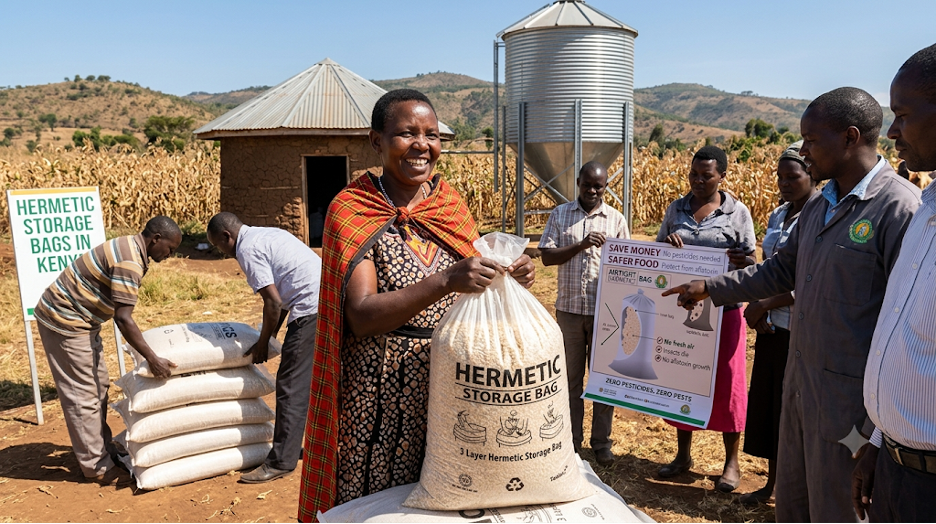
Post-harvest losses have long been a major challenge for smallholder farmers in Kenya. Rodent attacks, insect infections and mold often destroy stored grain, forcing many smallholder farmers to sell their beans, millet and maize immediately after harvest when market prices are at their lowest. This not only reduces household incomes but also threatens food security and limits the farmers’ ability to benefit from favourable market conditions. To address this challenge, many farmers have adopted hermetic storage bags, a simple affordable, and chemical-free technology that protects grain from insect pests by creating an airtight storage environment.
As one farmer explained, "It's a simple bag, but it saves my harvest. Instead of losing grain, I can use it to feed my family or sell it later for a better price."
By reducing post-harvest losses, these storage bags enable farmers to safely store their produce for longer periods, improve food availability within their households, and sell their harvest when prices are more profitable.
Interestingly, most farmers do not regard hermetic storage bags as an innovation. Instead, they see them as a practical solution that has become part of their everyday farming practices.
Source: Generated using Google Gemini
Case 2: Groundnut Sheller in Ghana - Empowering women via principles of frugality
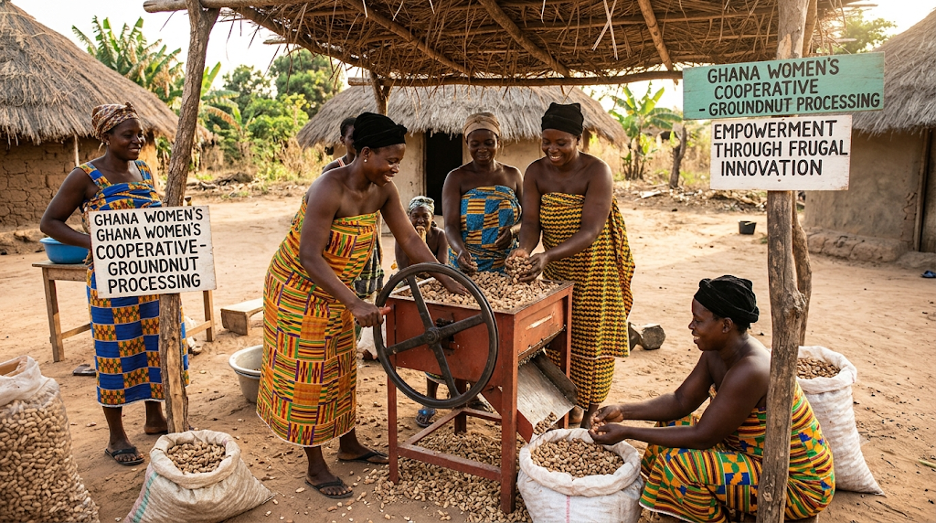
Groundnut farming is an important source of income and food security for many smallholder farmers in Ghana, particularly in the Northern regions. However, one major challenge faced after harvesting is the difficult and time-consuming process of removing groundnut shells. Traditionally, farmers, especially women, manually shell groundnuts by hand, which requires significant labour, takes many hours, and limits the amount of produce that can be processed. This often delays market access and reduces income opportunities. The groundnut sheller was developed as a practical solution to address this challenge. The machine uses simple mechanical technology to separate groundnut kernels from their shells quickly and efficiently, reducing the physical workload and processing time. Many of these machines are locally fabricated, making them affordable, easy to maintain, and suitable for rural farming communities.
Source: Generated using Google Gemini
Case 3: Briquettes charcoal production in Ethiopia- Access to clean energy for women
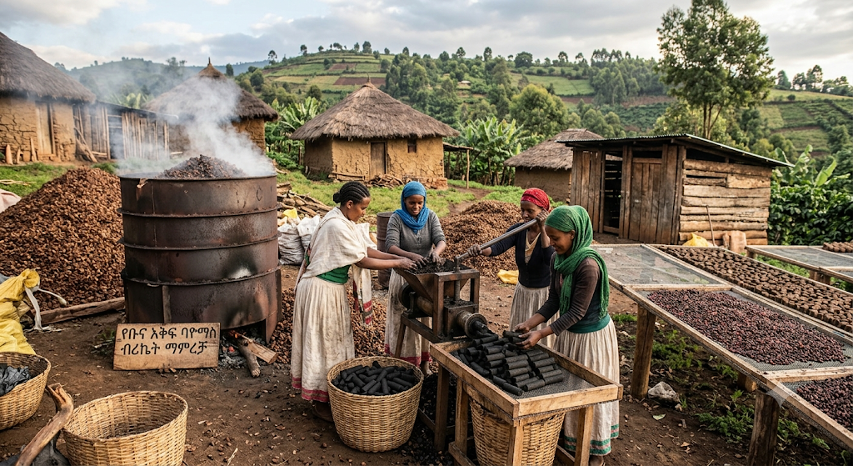
Farmers in the Oromia region of Ethiopia face a challenge with coffee waste (husk and pulp) that emits GHG from deposit digestion and particulate matter to the environment, affecting community health. To solve this problem, the Oromia Coffee Farmers Cooperatives Union (OCFCU), with its partner, the Horn of Africa Regional Environment Centre and Network (HoAREC&N), designed a project to convert agricultural waste (coffee husk) into briquettes to replace traditional fuel wood for cooking. Funding for the project was provided by RESET PLUS (CORDAID). Charcoal production through carbonization and briquetting of coffee husks aimed to reduce deforestation, greenhouse gas emissions from waste decomposition, and traditional household energy emissions. This innovation resulted in the production of briquette charcoal with high cooking potential and contributed to reductions in deforestation, pollution (indoor and outdoor), unemployment, the burden on women in finding firewood, and dependency on fuel wood. Furthermore, the project aimed to establish a market mechanism for the supply of carbon-neutral coffee, which would allow farmers to receive premium prices for their coffee products.
Source: Generated using Google Gemini
Case 4: Hybrid Hydroponics in Suriname - Reflecting the potential of entrepreneurship in resource-constrained settings
The current ongoing challenges regarding global warming bring many hardships to the field of agriculture. However, it also revealed that the farmers themselves are usually the ones who come up with innovations to combat these difficulties in their daily lives. This was also confirmed during one of the flash ethnography sessions, where one of the VOICE agricultural group members spoke with the owner of an agricultural and consultancy company in Suriname. He mentioned that many of the companies they advise, have to modify existing systems and methods to adapt to the Surinamese weather conditions, as well as the ongoing threat of global warming. The agricultural branch of the company has developed a hybrid hydroponics agricultural system. It is named this way because it has, in a way, merged existing versions of agricultural hydroponics into a sort of new variety. The company provides training, not only to people who are interested in growing their own pesticide-free crops, but also to companies and organizations, as well as to the communities living in the rural interior of the country. When we look at the environment of these last mentioned communities, we realize that there are regular cases of limited electricity availability. The company has tackled this problem by creating a system without the need for any water pumps, and where all the materials required to build the system yourself can be found in any hardware store around the country. This makes this version of agriculture accessible to those even in resource-constrained environments. When taking into account the requirement framework for what counts as a frugal innovation, the hybrid hydroponics system easily ticks off all the boxes regarding design, affordability, and accessibility in resource-constrained environments.
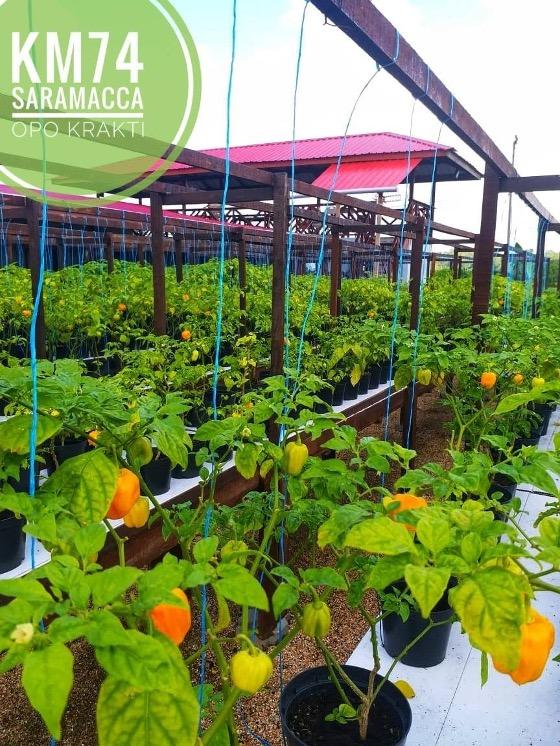
Source: B4Agro&FoodSystems Facebook Page
Reflecting on the concept “Frugal Innovation” and its significance for smallholder farmers
When thinking about frugality in agriculture, and as shown throughout this blog, in local contexts, frugal innovations often exist without the strict labelling of “being frugal”, as they simply arise out of the need for solutions to daily life problems (e.g. Hermetic Storage Bags). Farmers thus develop these solutions out of pure necessity, not familiarity with the academic term. Frugality in itself reflects an academic concept, which measures and defines what falls under the term ‘frugal innovations’. However, the practical implications go much further and helping the people recognize their own everyday solutions as frugal innovations by bringing the concept back to them bears high potential. Here, the previously mentioned frugal innovation framework by Pineda Escobar can be used to illustrate and explain its aspects.
Meanwhile, during the VOICE workshop, our group observed that there are some important characteristics that deem a frugal innovation to be sustainable. Resources, available opportunities, and needs differ in different contexts. This shows that using local materials, having inclusive considerations, and having accessibility remains crucial for successful frugal innovations (as seen in Ghana, where the groundnut sheller's local fabrication keeps it affordable and easy to maintain). Additionally, risks should not be neglected. The Ethiopian briquette project illustrates that converting coffee waste into fuel reduces deforestation and emissions, but only if the process itself is monitored for new health or environmental burdens. Ultimately, one must ask who bears the risks if frugal innovations fail, beyond the mere economic viability. This is an important question which should not be neglected in the cycle of frugality.
To synthesize the findings of this blog post and the underlying ethnographic conversations, the VOICE Agriculture group wants to highlight one important shared perspective, which cautions against adopting frugal solutions without examining some risks they may carry. Ultimately, frugal innovations and ideas of frugality must maintain the sovereignty of its end-users. When an innovation is introduced to smallholder farmers, it must ensure that it does not negatively impact their future wellbeing, dignity and prospects, including the preservation of agrobiodiversity and safeguarding traditional seeds. This makes the ability to fix and repair the innovations by themselves essential. Consequently, once an innovation is introduced to farmers, it must be ensured that it is technically fit, accessible and available without high needs for external effort. Therefore, the findings presented in this blog reflect a call for co-creation and engagement of local people: to recognize farmers not as recipients of innovation, but as the innovators they already are in their conceptualization and development of frugal innovations and products.
Participant bios
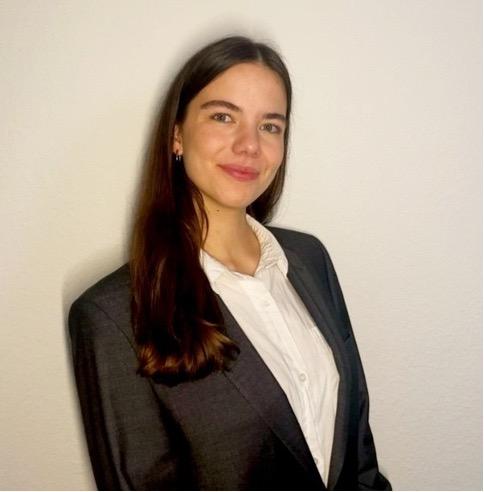 Amelie Hirz
Amelie Hirz is an Erasmus Mundus MAPP student from Germany, specializing in Governance and Development at the Institute of Social Studies (Netherlands) and the University of York (UK). Drawing on prior work experience at donor institutions and the NGO sector, her research explores smallholder agricultural development and its interlinkages with donor relations.
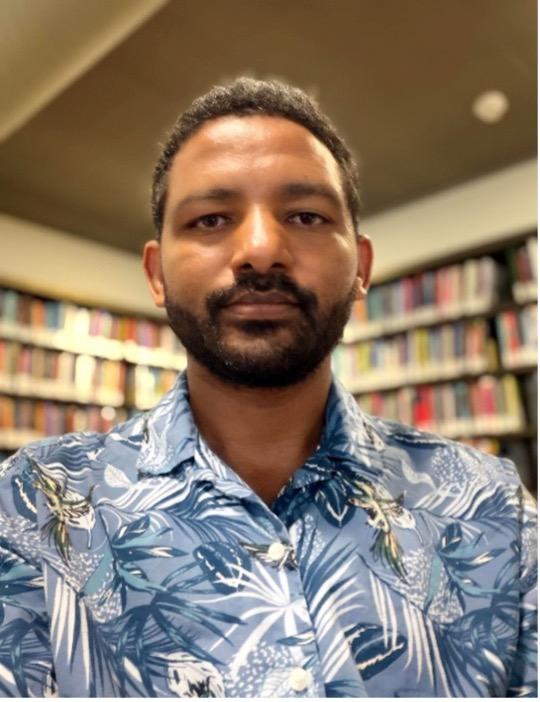 Asrat Mulat Asegie
Asrat Mulat Asegie is a PhD Candidate in African Studies Centre Leiden at Leiden University, the Netherlands. His PhD research is on Frugality and Frugal Innovations in the Farming Systems of the Ethiopian Orthodox Tewahedo Church Monasteries. Since joining his PhD, he worked as a lecturer at Wollo University, Ethiopia.
 Bolanle Abosede Okunoye
Bolanle Abosede Okunoye from Nigeria is an Agricultural Extension Officer, a researcher with interest in innovation, rural development, sustainable entrepreneurship and women empowerment. She is passionate about advancing research that informs inclusive innovation, sustainable livelihoods and resilient agricultural systems in developing economies.
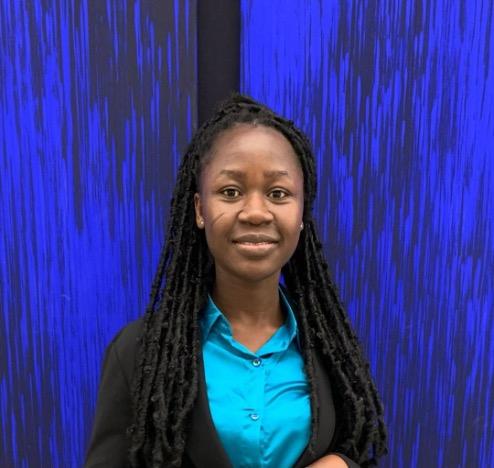 Emelia Atabo
Emelia Atabo is from Ghana and is a Sustainable Development graduate with a background in Agrarian, Food, and Environmental Studies from the International Institute of Social Studies (ISS), Rotterdam. Her interests lie in the digitalization of agriculture, sustainable food systems, and rural development. She is passionate about initiatives that address vulnerabilities in rural communities and brings practical research experience to support sustainable and inclusive rural development efforts.
 Mary Lorine Obala
Mary Lorine Obala from Kenya is a development researcher with a background in Agrarian, Food, and Environmental Studies from Erasmus University Rotterdam (ISS). Her interests include smallholder agriculture, digital technologies, and frugal innovation for sustainable and inclusive food systems. She is passionate about translating research into practical solutions for farming communities.
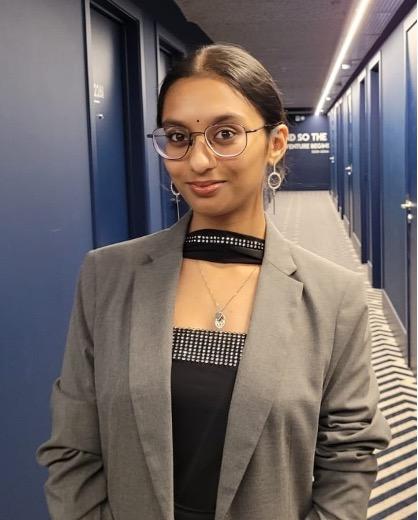 Sheetal Anroedh
Sheetal S. Anroedh is a student from Leiden University, The Netherlands, with Indian-Surinamese heritage. She has obtained a BA in International Studies with a focus on South Asia, and a minor in Frugal Innovation, and is aspiring to start her Master’s in International Development Studies at Utrecht University.