



VOICE
Learning Globally, Acting Locally
About these blogs
Over eight weeks, VOICE brought together master students and practitioners from across the Global North and South to explore frugal and bottom-up innovation. Participants worked in mixed international teams, often spanning multiple time zones and very different local realities, and each team focused on one domain: agriculture, digitization, health, housing and construction, or safety and security.
Each week, teams practised flash ethnography, gathering local perspectives through conversations in their own environment, and brought those findings into the group. That mix of disciplines, experience levels and contexts was not incidental: comparing perspectives, and sometimes reconciling real disagreement, was where the programme's value showed up most clearly.
Alongside weekly sessions with academics and practitioners from the programme's partner institutions, participants learned a skill many academics rarely practise: writing for a wider audience. Academic training tends to emphasise rigour and procedure; blog writing asks something different, getting an idea across quickly, clearly, and in your own voice. The blogs below are the result: grounded in local conversations, sharpened by comparison across contexts, and shaped through weeks of collaborative writing.
VOICE blogs
HEALTH
Breaking the Silence: Building a Dignified Route into Incontinence Care
- Dr. Sayantika Das, Ph.D.
- Angie Hernández
- Carlton Matingo
- Prof. Suman Phalswal
- Lydia Lampiri
HOUSING & CONSTRUCTION
Frugal Innovation: Small Means, Big Impact

AGRICULTURE
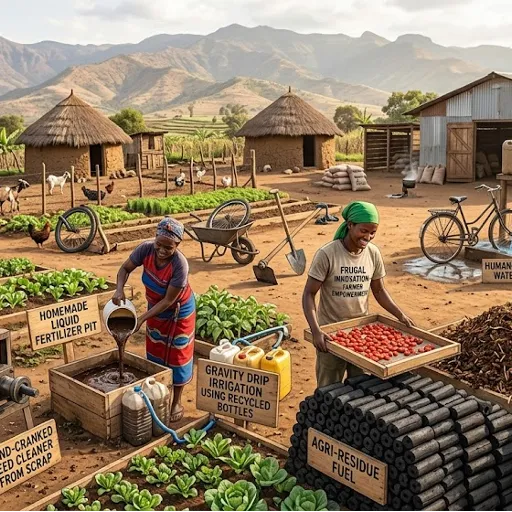
Agri-Frugal Hub: Telling the Stories of Hidden Voices in Agricultural Innovation
DIGITIZATION
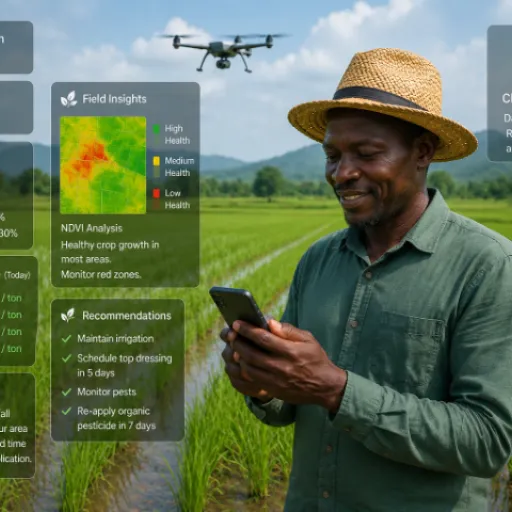
Beyond Broadcasts: How could Frugal Innovation guide the next Wave of AG‑TECH Platforms
- Saida Benhayoune
- Sam Nicholas Atanga
- Debashree Roy
SAFETY & SECURITY
More with less - but less of what?

- Nana Yaa Korankyewa Ayim
- Fisiwe Hlophe
- Tharin van Niekerk
Session recaps
Each week of VOICE, a different partner institution took the lead: introducing that week's theme, sharing local research and cases, and setting the agenda for participants' own investigation. These recaps follow those sessions one by one, written up as the programme progressed.
Click into any of them below to see what was actually discussed, who led it, and what came out of it.
VOICE Recaps 2026






WHAT IS VOICE
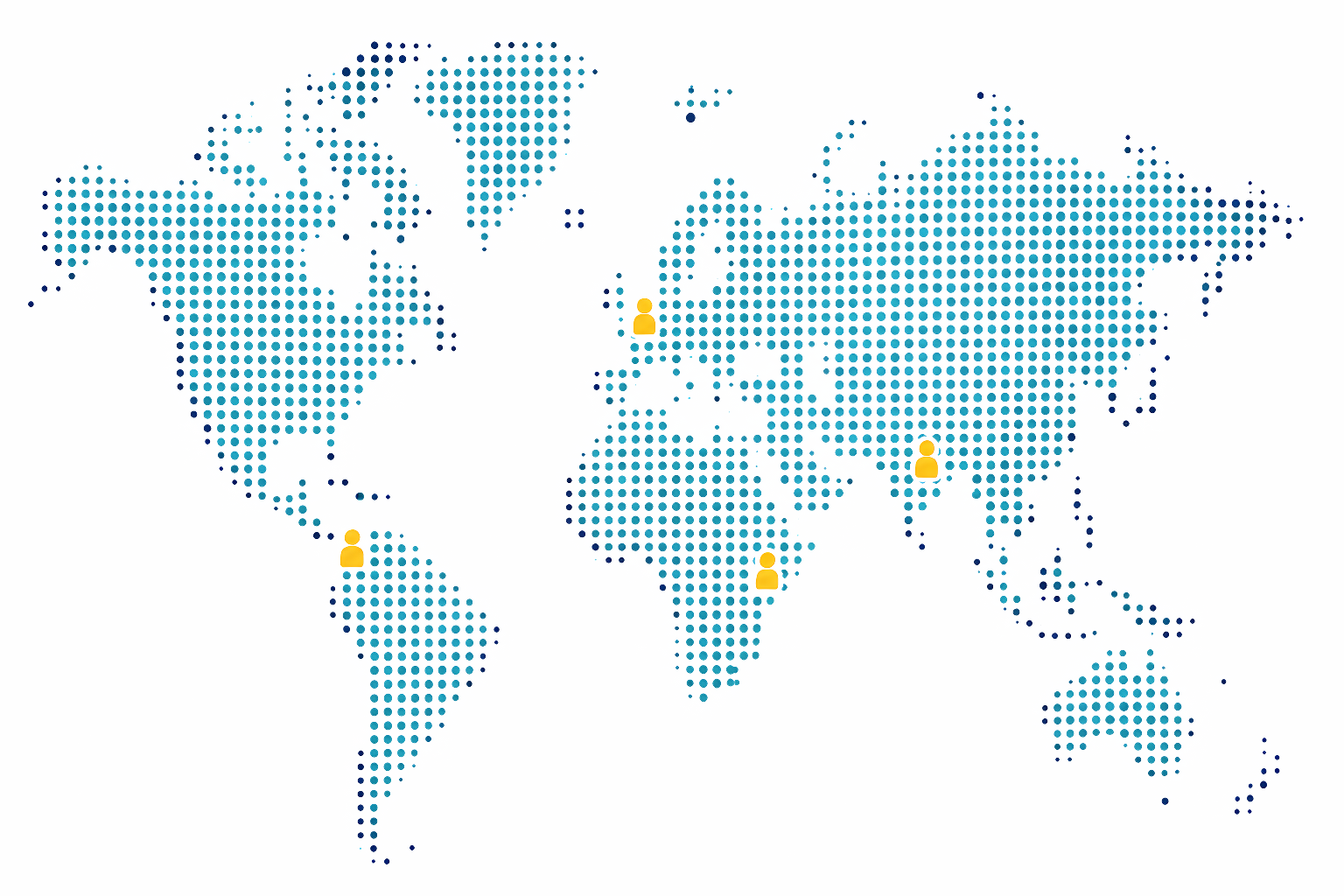
VOICE stands for Virtual Online International Collaborative Exchange. It brings together students and practitioners from the Netherlands, Colombia, India and Kenya for eight weeks. Not a traditional course. A collaborative programme built on a simple premise: the most valuable knowledge is already out there, just spread across different rooms on different continents.
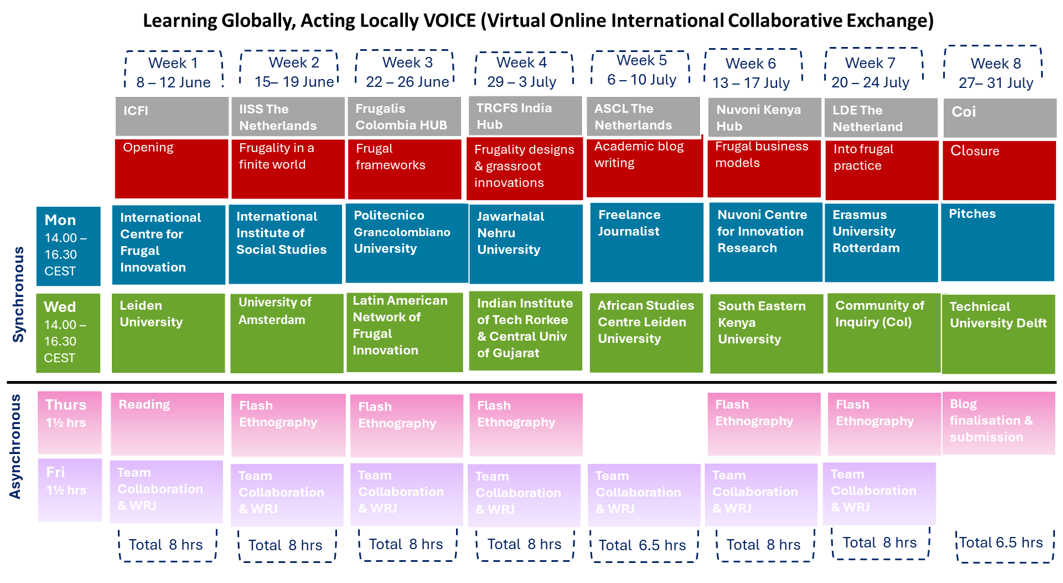
Each week during two two-and-a-half hour sessions, participants work in mixed multidisciplinary international teams. They conduct flash ethnography: structured conversations with people in their own environment about that week's theme. They bring those findings back to the group, compare what they found, and build something from it. Facilitators are in the room to learn as well, not just to share their knowledge and understanding.
Alongside the weekly sessions, participants keep a reflection journal and contribute to a jointly written team blog. That blog gets published on our website at the end of the programme. A real publication, not an internal hand-in.
Just eight hours a week. That is all it takes.
WHAT MAKES VOICE DIFFERENT
Most international programmes talk about global perspectives. VOICE generates them. Every week, forty participants from four continents bring observations from their own environment into the same conversation. Those conversations are the material.
There is no single authoritative view. Each partner institution leads one week of the programme, from their own context and with their own expertise. Everybody learns from each other, not just from professors.
WHAT YOU WILL GET
A peer network across four continents. Eight weeks of hands-on academic work on themes that matter in every region represented. Your team's blog on our website, a publication with your name on it. And an official numbered certificate with the logos of all partner institutions.
No ECTS credits. That is stated clearly and without apology: the value here is the experience, the network and the certificate, not the credit points.
Free of charge.
ABOUT FRUGAL INNOVATION
Frugal innovation is about designing solutions that work in the real world. Affordable, accessible, built for the context they will actually be used in. Conventional innovation tends to start with technology and then look for users. Frugal innovation works the other way around: start with what people need, then figure out what it takes to get there.
It is not about cutting costs. It is about dropping assumptions. What does this community actually need? What do they already have? The answers tend to be more useful than what a lab would design from a distance.

ABOUT BOTTOM-UP INNOVATION
Bottom-up innovation starts where the problem is. Not in a lab, but in the neighbourhoods, fields and clinics where people have been solving problems with whatever was available. It rarely makes it into textbooks. That does not make it less real, or less effective. VOICE takes it seriously.
WHO SHOULD APPLY
Are you a postgraduate student with a genuine interest in sustainable innovation and/or social change? Do you have honest curiosity about how things work beyond your own context, and the discipline to bring your own observations into the conversation? And are you available eight hours a week between 8 June and 31 July?
Then this is for you.
You do not need prior knowledge of frugal innovation. You do need to be internationally oriented, genuinely curious about how these challenges play out across different parts of the world, and self-driven enough to follow through on eight weeks of knowledge gathering and exchange.
What is happening in your neighbourhood, your city, your region that belongs in this conversation? That is what we are interested in.

PRACTICAL DETAILS
Dates: 8 June to 31 July 2026
Sessions: Monday and Wednesday, 14:00 to 16:30 CEST via Zoom
Time commitment: approximately 8 hours per week (5 hours live , 3 hours team work)
Target audience: master students
Certificate: official numbered certificate with all partner institution logos, no ECTS credits
Platform: Brightspace, Private LinkedIn Group
Cost: free of charge
Session times per region:
Amsterdam, The Netherlands: 14:00 to 16:30 CEST
Bogotá, Colombia: 07:00 to 09:30 COT
New Delhi / Roorkee, India: 17:30 to 20:00 IST
Nairobi, Kenya: 15:00 to 17:30 EAT
FAQ
Who can apply? Postgrad students from all four partner regions. No prior knowledge of frugal innovation required. Not sure if you fit? Get in touch.
Is there a cost? No. Free of charge.
Will I receive credits? No ECTS. You get an official numbered certificate with the logos of all partner institutions, on condition of full participation.
What is the time commitment? About eight hours a week: two live sessions plus time to collect data through flash ethnography, compare findings with your team, write your blog and complete your weekly reflection.
What language is the programme in? English.
What is flash ethnography? Each week you have a short structured conversation with people in your own environment about that week's theme. You bring what you heard into your international team and compare it with what your teammates found. It is a way of generating local knowledge that actually travels.
What is the final output? Each team writes a blog together. It gets published on the ICFI website. A real publication, not an internal hand-in.
What happens after I apply? First come, first served. After 1 June you receive a confirmation with practical details and your Brightspace login.
PARTNER INSTITUTIONS
VOICE runs across four regional hubs. Each hub recruits its own participants and leads one or more weeks, bringing knowledge from their own context into the shared conversation.
Netherlands: ICFI and African Studies Centre, Leiden University / ISS, Erasmus University Rotterdam / TU Delft
Colombia: Politecnico Grancolombiano
India: JNU New Delhi / IIT Roorkee / CUG
Kenya: NCIR / SEKU / University of Nairobi
FUNDED BY
VOICE is funded by NWO/NKO through the Comenius programme.

VOICE: Learning Globally, Acting Locally
 An eight-week international online programme on frugal and bottom-up innovation. Four countries. Forty participants. One question that connects them all: what can we learn from each other that we could never figure out alone?
Applications are open.
Deadline is extended to: 4 June 2026.
Programme starts 8 June.
APPLY
Places are limited to 10 participants per region. First come, first served. Deadline: 4 June 2026. Free of charge.
Are you in?