


Sanghamitra Chakravarty and Peter Knorringa
The overriding focus to reduce anthropogenic greenhouse gas (GHG) emissions has been on energy efficiency and technocentric solutions, which feature prominently in climate policy documents and energy models. The role of sufficiency policies in reducing energy and material consumption is projected to be much less. What is not yet acknowledged as a path towards greater resource efficiency in policies or energy scenarios is the role of frugality. This is however quite contradictory to the sustainable development goals which recognise that a fundamental shift in current patterns of consumption and production is imperative to fulfil the needs of all (SDG 12). The calls for using fewer resources and producing less waste to achieve sustainable consumption and production are very much in line with principles of frugality. This lack of recognition is not fully surprising, because the practice of frugality is alien beyond its natural habitat of resource-constrained environments in the Global South. However, we argue that in a world of limited resources, frugality should become more recognised as a mindset to reduce energy and materials consumption, including in contexts of apparent abundance.
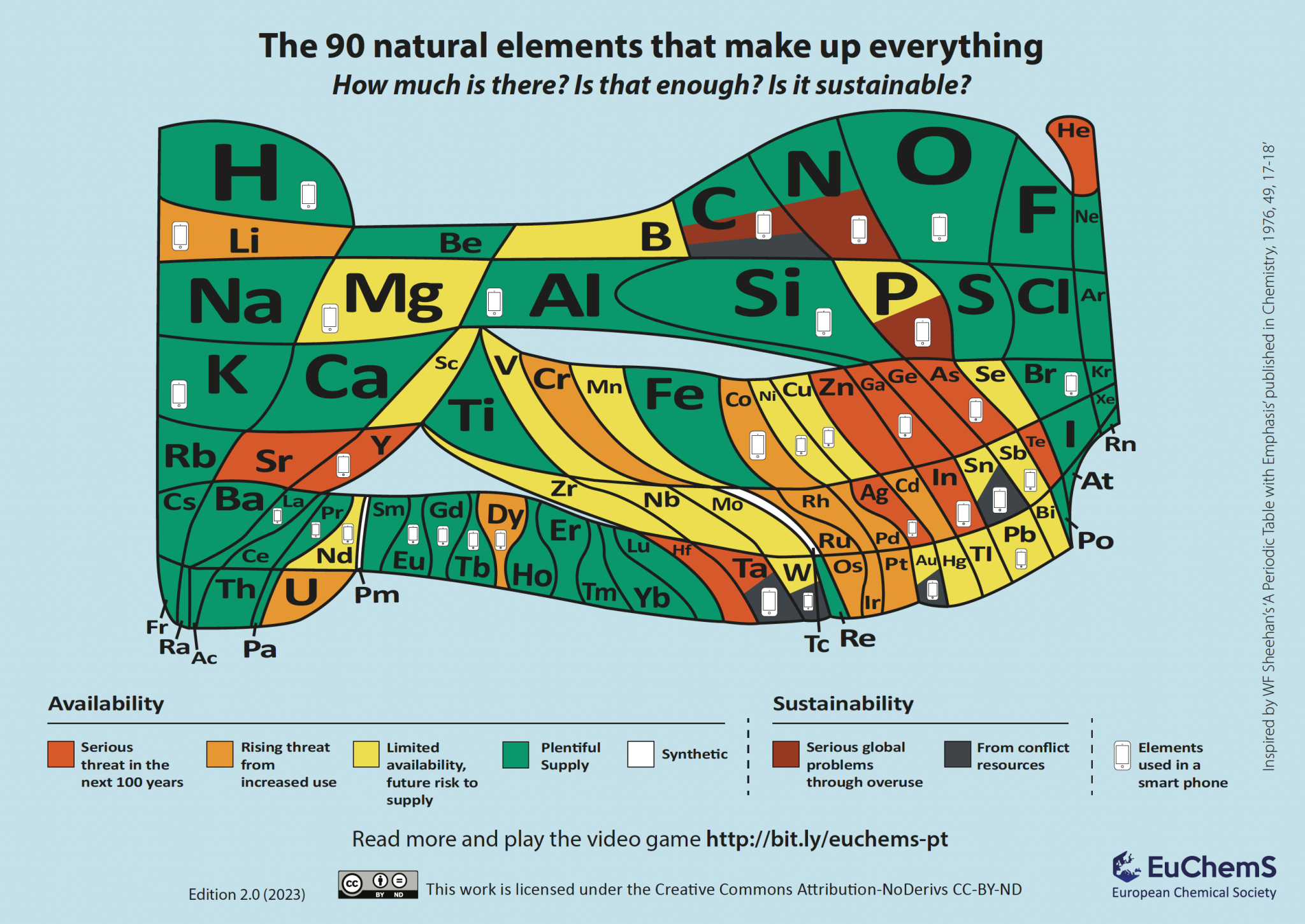
EUChemS Periodic Table Edition 2.0 (2023)
Sufficiency and frugality
Sufficiency and sobriety, as defined by the IPCC Report, are measures and daily practices that reduce demand for energy, materials, land and water through lifestyle changes. Initial thinking on sufficiency was pioneered by scholars such as Wolfgang Sachs at the Wuppertal Institute in Germany in the late 1990s. The limited attention for sufficiency in important reports such as of the IPCC or IEA may be due to a variety of reasons. These could stem from an understanding of the limited impact of such measures on climate change based on technological aspects or the difficulty in changing consumer behaviour, or to an assumption that sufficiency measures could negatively affect economic growth and the fear that such measures would be unpopular and politically costly.
Despite this, there has been a growing interest in sufficiency in Europe and a call for its recognition in policy circles and energy scenarios. Many organizations have come together to pass a manifesto placing “sufficiency at the heart of EU’s future”. Following the Russian invasion of Ukraine which led to the loss of access to cheap gas in for example the Netherlands and Germany, actions were taken to lower thermostat settings in public buildings. The European Chemical Society in its Periodic Table has drawn attention to element scarcity and overturning of biogeochemical cycles for nitrogen, phosphorus and carbon, and transgressing the planetary boundaries. EUChemS’s recognition of the rising threat from increased use for elements like Lithium and Tantalum used in smart phones, and advocating for longer usage and easy repair of smart phones, are clear appeals for sufficiency. As also projections for a net-zero German chemical industry by PtX Lab Lausitz, where reduction and substitution strategies are stated as more resource-efficient with fewer environmental impacts as compared to renewables. Research to study how sufficiency can be integrated within National Energy and Climate Plans has been funded under Europe’s Horizon programme. These initiatives are not just a response to the climate crisis, but also efforts to build “a resilient and resource-wise Europe”.

Frugality and frugal innovations refer to innovation processes and products characteristic of resource constrained environments typically found in low- and middle-income countries. Frugal innovation has been studied as part of the Appropriate Technology (AT) movement and in the Technological Capabilities (TC) literature since the 1970s. Inspired by Schumacher’s “study of economics as if people mattered”, growth and industrialisation were extensively studied with respect to unemployment and basic needs in frugal innovation antecedents. Modern manifestations of frugality in a globalised world have been studied in the past two decades in business and management literature.
Historically, frugal solutions were developed by local firms deeply embedded within resource constrained contexts. They represent alternate forms to dominant mainstream innovations catalyzed by structural and social specificities which are typically not found in contexts of smoothly functioning innovation systems. Frugality is borne out of necessity and is in that sense distinct from sufficiency. In contexts where frugality is a necessity and where the need for frugality goes together with living in poverty, the intrinsic motivation is to move out of this situation.
In contexts where frugality is a necessity and where the need for frugality goes together with living in poverty, the intrinsic motivation is to move out of this situation.
Sufficiency, on the other hand, is mostly associated with high income countries. As Muradian (2019) observes, sufficiency can be understood as “frugality as a choice”, where people have the privilege and freedom to choose without threat to their capabilities and survival. Frugal consumption as a choice means people can afford to buy more or more sophisticated and more expensive goods and services, but they choose to consume more moderately. This kind of frugal consumer behaviour seems to be on the rise, especially within a section of well-educated and sustainability-conscious citizens in Europe. But it continues to be a niche phenomenon and may not have long-term impact on climate goals due to at least two reasons. First, within a system where cutting-edge technology with endless options of differentiated products is the norm, frugal variants of products are rare. This makes it difficult to lower consumption despite intentions to do so. Second, lower demand in one section of the market has been shown to lead to an overall increase in consumption due to rebound effects. Without foresight and governance, unintended consequences are more likely to crop up. This has been explicitly witnessed in the case of frugal innovation in the Global South. Aspirational goods have stimulated patterns of overconsumption without contributing to SDG goals. Widespread marketing of single-use plastic sachets in countries lacking the infrastructure to manage such streams of waste aggravated environmental harm while cannibalizing the spaces traditionally served by domestic firms and informal economy.
Sustainable consumption and production: the future is frugal
The importance of sufficiency and frugality in reducing environmental impact is not a matter of ideological position. It is evident that there are not enough resources to go around - this is being acknowledged in climate models and resource maps – the science is clear.
As we transgress more planetary boundaries to a point of no return, efficiency and sufficiency strategies need to be complemented by frugality in addressing climate goals. We conclude with three observations. First, for a future which is not resource abundant, there is a need to imagine and enable alternate forms to mainstream innovations, also in contexts where frugality is a choice. Second, thinking about sufficiency has mostly focused on more sustainable consumption, without much attention to methods of production. However, it is difficult to produce frugal alternatives without changing the methods of knowledge production. As an entry point, more support is needed for slow science, sustainable laboratory practices and citizen science which challenge existing knowledge production systems. Lastly, despite some overlaps in notion, so far, the scholarship on frugality and sufficiency are parallel lines of thinking with little attempt to engage with each other. Muradian’s highly insightful paper referenced here is a notable exception. Proponents of sufficiency would stand to benefit from frugality thinking. Similarly, the emerging interest in sufficiency in Europe, particularly at the national level, could offer interesting lessons for institutions in the Global south where frugality is a necessity.
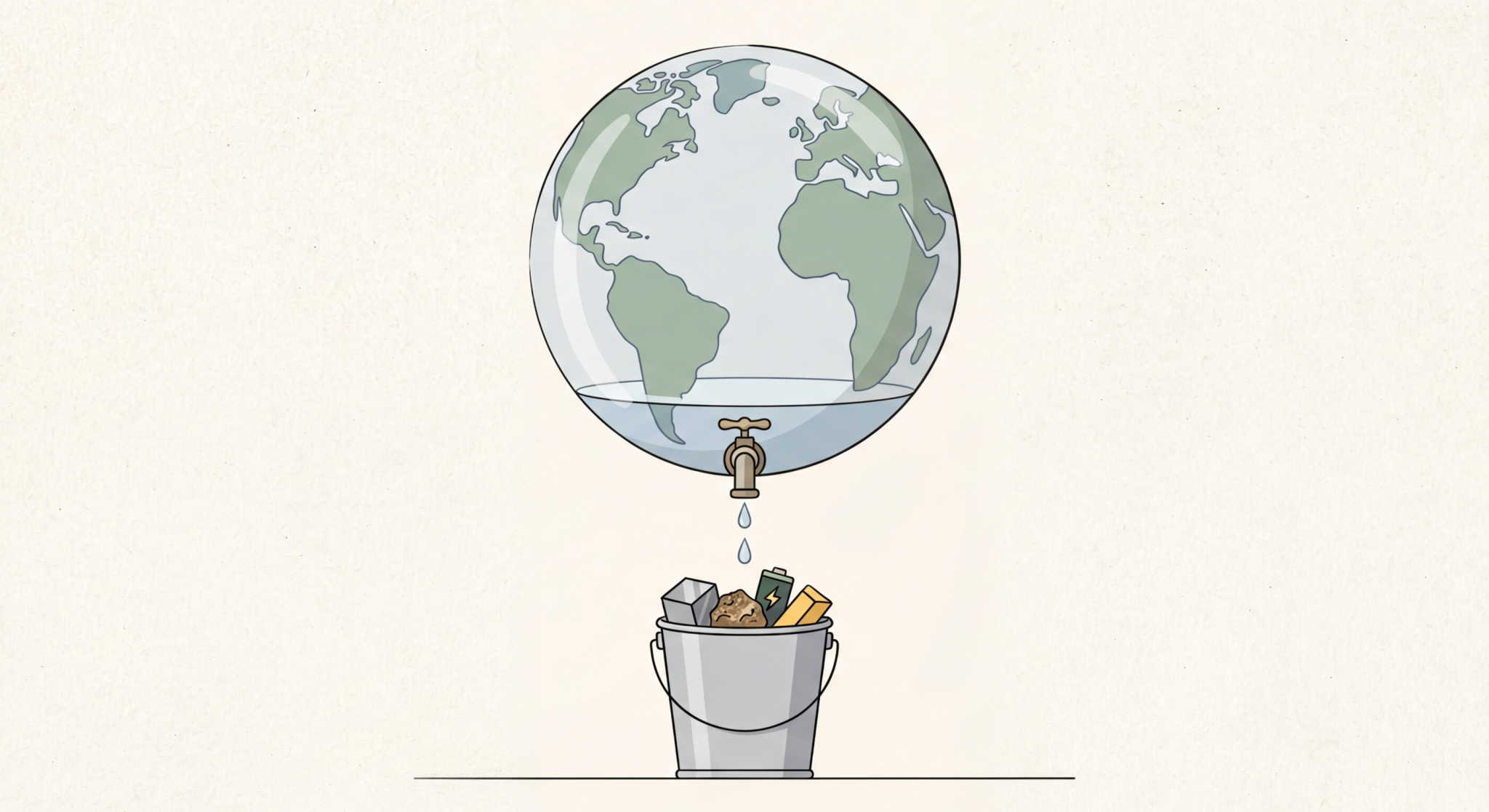
As we transgress more planetary boundaries to a point of no return, efficiency and sufficiency strategies need to be complemented by frugality in addressing climate goals.
References:
Muradian (2019). Frugality as a choice vs. frugality as a social condition.
Knorringa & Bhaduri (2018). Why Europe needs Frugal Innovation
Chakravarty & Gómez (2024). A development lens to frugal innovation.
Sanghamitra Chakravarty specialises in participatory research methods and in stimulating dialogue on the societal impact and public value of science, technology and innovation. She has an interdisciplinary background in chemical engineering and development studies and has worked extensively on innovation governance in both research and policy in diverse international contexts including India, Oman, The Netherlands and South Africa. She is currently affiliated with the Van ’t Hoff Institute for Molecular Sciences and also works independently through her company, Socials of Science on various projects.
Peter Knorringa is a Professor of Private Sector & Development at the International Institute of Social Studies (ISS) at Erasmus University Rotterdam. Professor Knorringa is the academic director of the International Centre for Frugal Innovation (ICFI), a multi-disciplinary research centre that is part of the strategic alliance between Leiden University, Delft University of Technology and the Erasmus University Rotterdam in the Netherlands.