



by Shekhar Jain and Peter Knorringa
Introduction: Frugal Innovation and Standards
Nobody wants to buy or use an inferior product or service that can cause serious harm to yourself or to your loved ones. So it is in principle a good thing that manufacturers and service providers need to comply with a variety of quality, compatibility/interoperability and safety standards. In India, certification is routinely carried out by government accredited agencies or formally independent private sector firms like international consultancy companies. However, the quality, compatibility and safety of products manufactured in the informal sector is not checked through certification, their ‘license to operate’ depends more upon localized legitimacy perceptions based on user experiences and other feedback. In this blog we use the example of the development of e-rickshaws (battery operated paratransit vehicles, a mode of ‘informal transportation’.) in India to show how formal and informal standards may interact. Paratransit is a flexible public transportation service that supplements fixed-route mass transit. Some of the more constructive interaction patterns can help to achieve a higher level of acceptance of such frugal innovations like the e-rickshaw. In turn, a higher level of acceptance increases the potential for scaling, enabling frugal innovations to become more mainstream. Such mainstreaming already took place in India with e-rickshaws servicing 60 million+ passengers every day.
E-Rickshaws: Frugal Innovation with Certified Parts
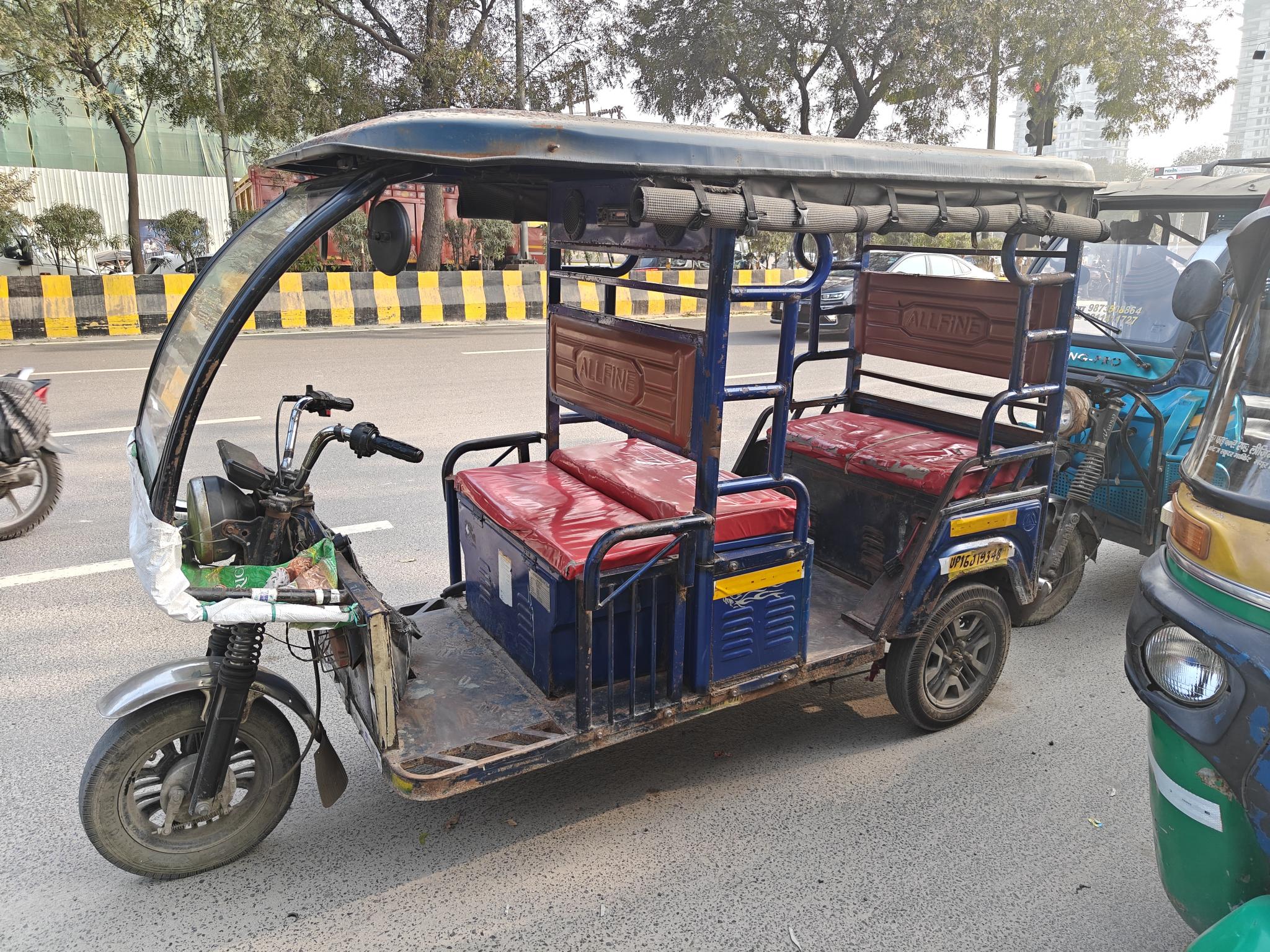
E-rickshaws were designed using a mix of existing motor vehicle parts and imported Chinese components. They first evolved in the city of Delhi, in a bottom up manner within a local ecosystem, responding to local needs, and were rapidly adopted in large numbers by stakeholders within the cycle rickshaw ecosystem. In doing so the e-rickshaw largely replaced the manual drudgery of cycle rickshaw driving and fulfilled an unmet need of motorized paratransit, without much disruption to existing actors.
E-rickshaws are an example of a frugal innovation. They are cost effective as a sharing mode of transportation and they are contextually relevant within Indian cities. Moreover, e-rickshaws are eco-friendly being an electric vehicle. And they possess a humane and inclusive outlook. The open source nature of the e-rickshaw gave it a more democratic nature, while its simplicity made it easier to operate, even for drivers with limited formal education and training, which again helped its proliferation.
Initially the e-rickshaw operated as a non-motorized vehicle as the then Central Motor Vehicle Rules of India did not consider any electric vehicle with motor power up to 250 watt and speed of less than 25 Kilometer/hour as a motor vehicle. However, to meet the market demand manufacturers started applying higher powered motors exceeding 250 watts, sometimes reaching up to 850 watt.
Government Hostility and Regulatory Challenges
The rule, however, gave enough time, and pretext, to high powered e-rickshaws to gain sufficient numbers before they were tested and results were placed in court on record, which made it essential for the government to provide a legal framework for their operations. It is important to note that the Indian government had already amended the 250 watt rule, limiting the exemption only to 2 wheelers. This amendment clearly shows the initial hostility of the government towards the e-rickshaw.
A next important step in this case is that the Indian government changed the legal framework and created a completely new class for e-vehicles within the India motor vehicle act. A key aspect that helped in the fast acceptance of e-rickshaw designs is that they used (repurposed) existing standardized motor parts in manufacturing e-rickshaws. Moreover, the informal standards among the e-rickshaw producers reached a point where they achieved sufficiently strong legitimacy to overcome the hostile government attitude and producers were able to push other stakeholders to take note of these informal standards and they also partly redefined existing standards.
This convinced the Indian transport minister that many of the existing informal e-rickshaw design standards could be safely adopted. His technical team accepted the claim that repurposing of existing standardized parts would not compromise established quality and reliability. Therefore, relying on the use of standardized parts was crucial in easing the acceptance of the quality/performance aspects of the e-rickshaw.
Informal Standards and Local Legitimacy
More in general, it is pertinent that regulators and standard setters appreciate the local informal manufacturing ecosystem – as well as the actors who created the frugal innovation. To ensure that standards/regulation are useful for the frugal innovator and to promote frugal innovation it is important that regulators appreciate the local informal standards emerging from the grassroots. So, instead of imposing the existing formal ‘standards’ or criterion external to the ecosystem, it is crucial for regulators to build upon the emerging informal standards in collaboration with local innovators. In the present case such constructive interaction did not really come about.
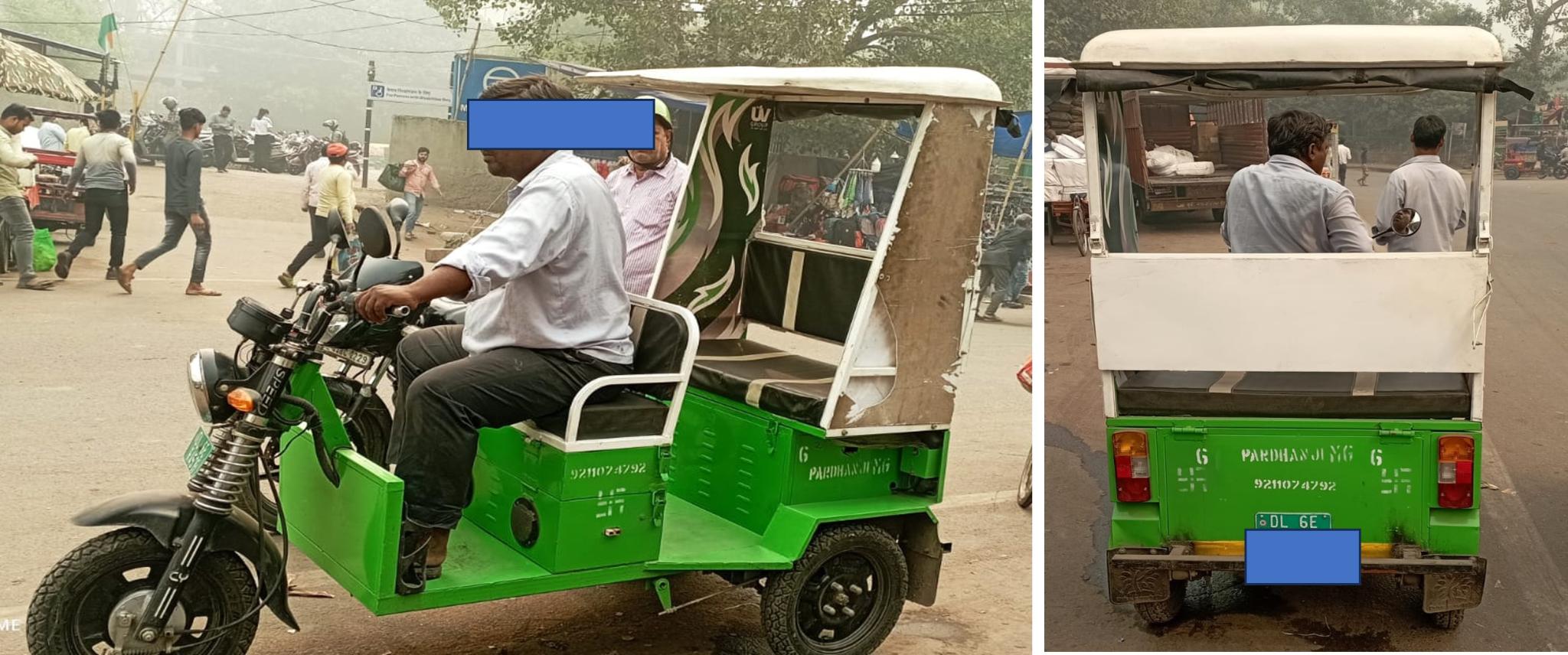
The next set of e-rickshaw regulations couldn’t deeply appreciate the local stakeholders who were part of the e-rickshaw revolution. At many places government brought stringent regulations which were difficult for these bottom up frugal innovators to meet. The new regulations discouraged for example e-rickshaw aggregators, who give e-rickshaws on rent, and who were among the early adopters of the e-rickshaw. Additionally, the government made type approval certificates compulsory to manufacture/sell e-rickshaw without providing any approved open source design for everyone to adhere to. This effectively excluded the small-scale manufacturers who didn’t have enough funds to take type approval certificates, and many of these continued informal manufacturing. The aggregators on the other hand used their working knowledge to redefine pedal based rickshaw to innovate a newer type of informal battery vehicle. This again redefined e-rickshaw standards in the old Delhi area. Some firms later copied these designs, and formalized them, to build yet another new type of e-rickshaw. In short, the imperfect interaction dynamics continue and provide important lessons to understand better under which conditions informal standards can become a breeding ground for more inclusive formal standards.
Conclusion: Lessons for Frugal Innovation
Without exaggeration it can safely be said that, in the present times, formal standards are indispensable for all mainstream and legitimate production processes, even though they might not be very visible to an average consumer. At the same time, it is important to recognize that frugal innovations, using informal standards that are based on local legitimacy perceptions, can usefully challenge the status quo in the formal economy. In fact, in emerging economies like India formal and informal standards co-exist and they constantly interact to shape the modus operandi in the economy.
This helps to create more breathing space for the idea of frugal innovation and positions frugal innovations as sites for the creation of new (initially informal) standards. Moreover, this liberates the idea of frugal innovation from the compulsion of defining it in light of existing formal standards or other external criteria, which automatically makes frugal innovations look like second-rate cheap substitutes, inferior to the ‘real thing’. This also further helps to position frugal innovations beyond stop gap solutions.
Simultaneously it needs to be acknowledged that frugal innovators cannot be oblivious of the formal standards ecosystem around them. Especially when they wish to scale and mainstream their frugal innovation, they need to increasingly interact and engage with formal standards. For example, they can incorporate more and more standardized parts and materials within their frugal product, even if that involves repurposing, as this may help frugal innovations to gain wider legitimacy and regulatory acceptance. Finally, policy makers can contribute to mobilizing the creativity in the informal sector by starting to view informal standards, and the people who mobilize them, as a stepping stone instead of as a nuisance to ensure more inclusive and sustainable innovations.
For a deeper understanding of the dynamics of informal, frugal, and small-scale innovation in urban transportation, see: Jain, Shekhar & Bhaduri, Saradindu. (2025). "Jugaad as Small Science: The ‘e-Rickshaw’ Conundrum in Delhi." HoST - Journal of History of Science and Technology, 19(2), 42–64. https://doi.org/10.2478/host-2025-0013
This open access article is licensed under the Creative Commons Attribution-NonCommercial-NoDerivs License.
About the authors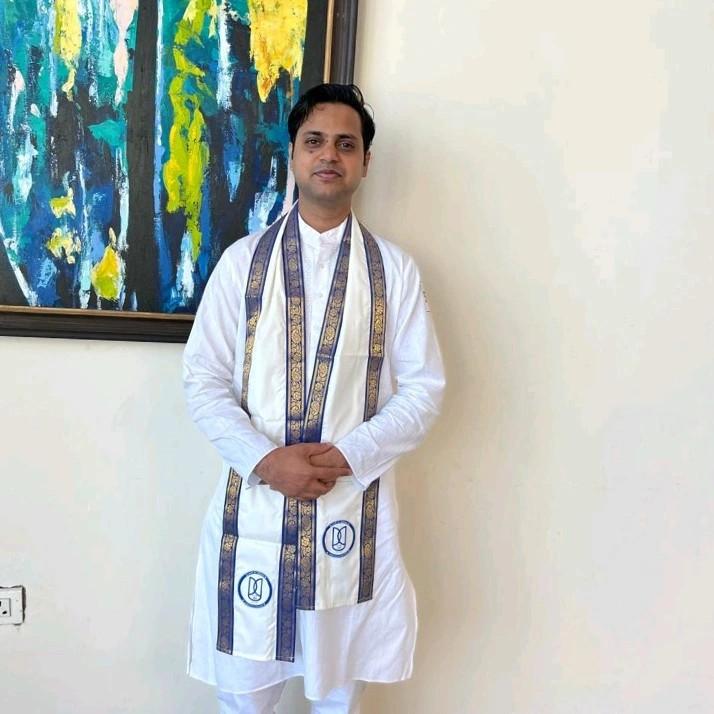 Shekhar Jain is a science, technology and policy scholar specializing in the informal economy, informal (Frugal) innovations and standards. He holds a PhD from the Centre for Studies in Science Policy at Jawaharlal Nehru University, where his research focused on the standards and standardization of innovation in the informal economy. He studied jugaad vehicles, a form of Indian informal transportation vehicles.
His broader work explores micro, small and medium-scale industries and the informal sector, with particular attention to value chains, standards, innovation, legitimacy, governance and frugality. Alongside his academic work, Shekhar has extensive experience in the policy arena, having worked with a Cabinet Minister in the Government of the National Capital Territory of Delhi on portfolios including transport, IT, law and revenue. Shekhar has also worked in the Intellectual property rights domain with global IPR firms. Peter Knorringa is Professor of Private Sector & Development at the International Institute of Social Studies (ISS), Erasmus University Rotterdam, and Director of the International Centre for Frugal Innovation (ICFI).
His research focuses on the role of entrepreneurship and small businesses in sustainable development, with a particular emphasis on frugal innovation — cost-effective, accessible solutions that create impact for resource-constrained communities. Knorringa combines academic insight with international practice, exploring value chains, networks, social capital, and governance in diverse global contexts, while fostering collaboration between researchers, policymakers, and practitioners.


