


 As part of the Leiden-Delft-Erasmus Minor Frugal Innovation for Sustainable Futures, we highlight the work of students who engage in interdisciplinary research on sustainable and inclusive solutions.
In this student blog, Linh Pham examines how current enset food-security initiatives intersect with gender, power and participation. While recent innovations aim to scale up enset production and improve processing technologies, Linh asks a critical question: who actually gets to participate in shaping these innovations.
Linh Pham is a student in the Management of International and Social Challenges programme at Erasmus University Rotterdam. Her academic interests focus on social science research, collective action and decoloniality.
Enset – the tree against hunger
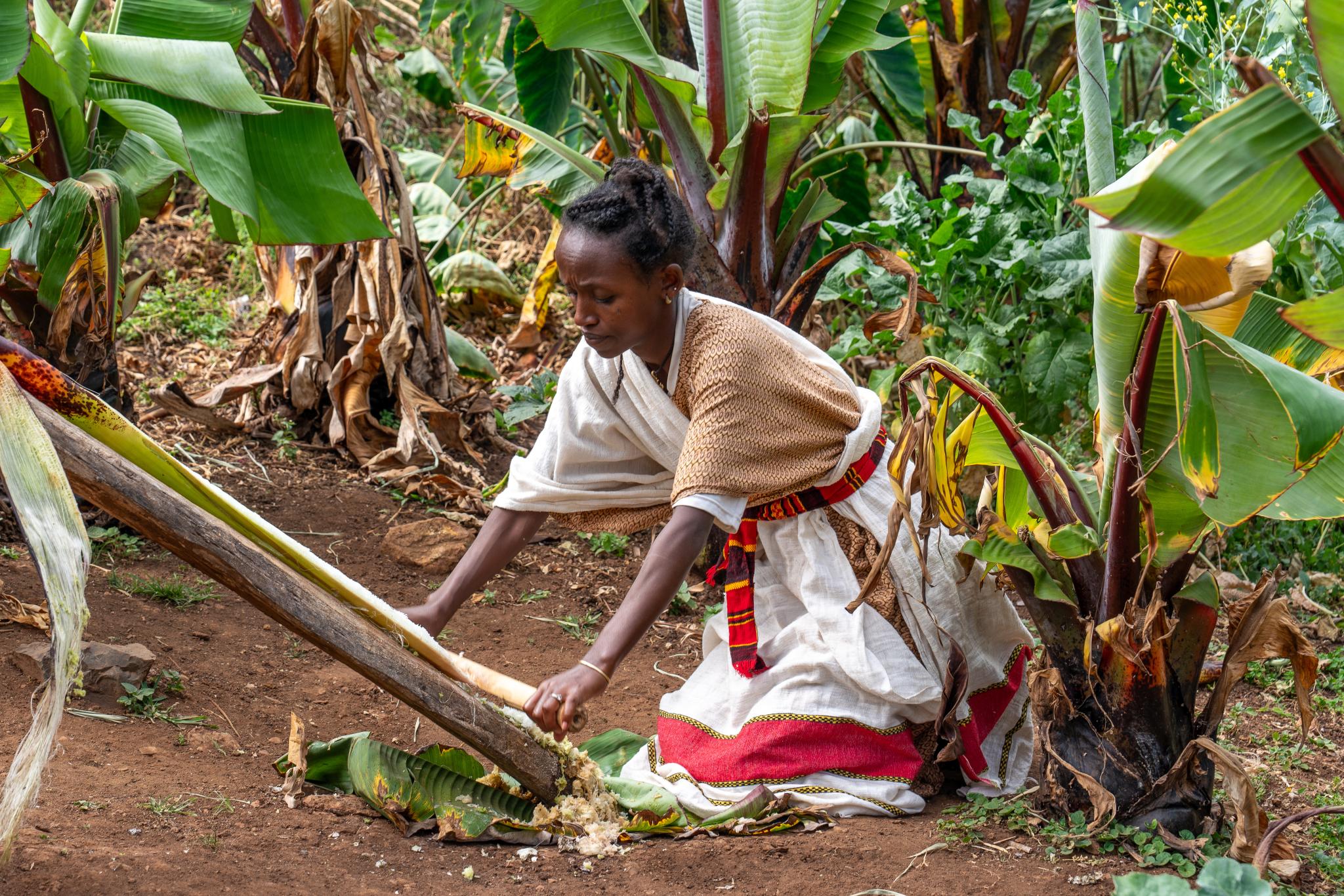
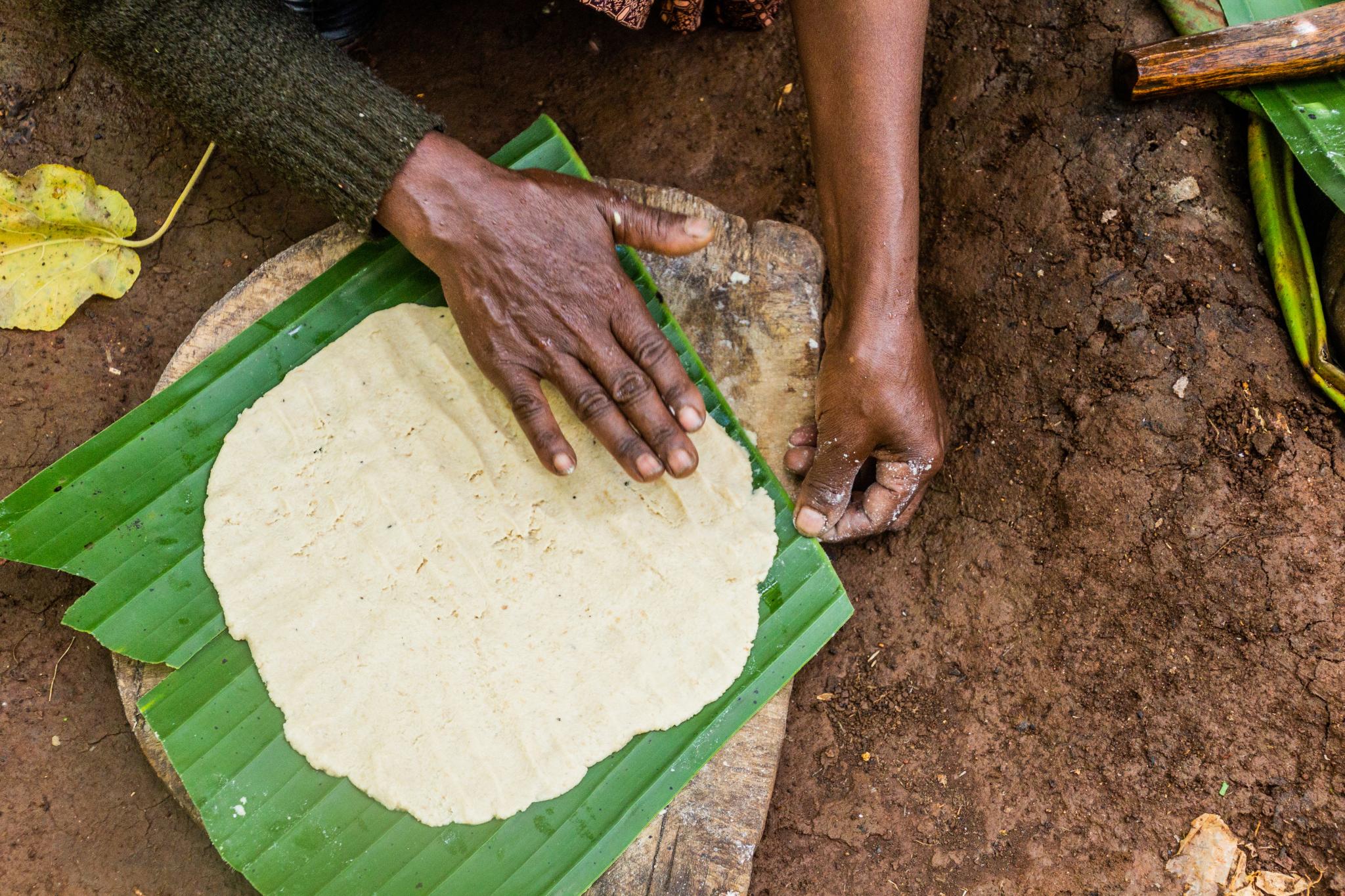
“When other crops fail, enset never lets us go hungry,” says Almaz, a smallholder woman farmer, about Enset, a staple crop and food native to Ethiopia (Mongabay News, 2025). "You plant it at any time, you harvest it at any time and it's perennial. That's why they call it the tree against hunger.", says researcher James Borrell about Enset (BBC, 2022). An indigenous and climate-resilient crop, Enset has helped Ethiopian families, especially subsistence farmers, survive droughts, floods, and other disasters exacerbated by climate change. Women are the exclusive cultivator, harvester, and maker of Enset. The plant feeds approximately a fifth of the Ethiopia's population, but has for a long time been sidelined as a food source. The manual process of grating and fermenting enset is a highly laborious and time-consuming one, a main reason behind its underdevelopment and underutilisation.
Enset development initiatives
Amidst the increasingly challenging food insecurity issue due to climate change, Enset gained attention from scientists and the government as a solution to alleviate hunger sustainably in the region. A group of engineers and researchers from Arba Minch came up with a simple, frugal set of manual machines that cut down the enset-making process significantly (Alabaster International, 2023). The innovation is developed locally, targets subsistence farmers, and is built upon low-sophistication technology with adequate efficiency. These machines are now stationed in women-led cooperative centres in parts of Southern Ethiopia where farmers have access to 24/7 with a fee. Additionally, researchers introduce air tight containers that fasten the fermentation and prevent bacterial contamination and a bacteria-immune Enset variant. With increasing attention and hopes for enset as a climate-resilient crop, partnerships with NGOs (Alabaster International and Girl Child Network) and government leaders (representing Ethiopia’s Ministry of Agriculture) were formed to scale up the cultivation and production of enset, aiming to make it a food security crop for primarily Ethiopia and Kenya.
The question of women’s inclusion
While designed with local knowledges respected, these initiatives are not inclusive of women in the research process. There has been no evidence of civic participation or involvement of local women in the design, engineering, and decision-making process. The use of enset-making machines also comes at a cost, which according to a private source (courtesy of an Ethiopian researcher), is the number one concern for enset farmers. Oftentimes, frugal innovations are described detached from their embedded socio-political landscape, rendering the questions of who wins, who loses, how does the technology disrupt the status quo, elusive from the discourse. Women are the backbone of these Enset development projects, yet gender equality and inclusivity are not explicit values or goals.
Gender, co-creation, and Fairness of frugal innovation
During my minor I have been introduced to the potentials of frugal innovation as well as its "unfulfilled promises" of alleviating poverty while contributing to a sustainable future. The main overlooked issues with frugal innovation are gender, co-creation/inclusivity, and political embeddedness and this section will discuss how frugal innovation interacts with them. Firstly, from a gender lens, frugal innovation can actively or passively empower women and expand their capabilities or it can very well exacerbate gender inequalities through exclusion, for example (Vossenberg, 2017). Smallholder agriculture employs 66% of the Ethiopian population and contributes to a third of the country's total GDP (UNDP, 2024). Women takes up 47% of the rural labour work force, yet only accounts for 12% of total land holdings by subsistence farmers. Under these conditions, access to the enset processing centres can generate an additional source of income for women but does not entail transformative changes as the land to grow enset is owned by the male figures in their lives. According to the private source, slightly more than half of the enset farmers who participated in the survey believe that the innovation was based on community needs. Local participation and inclusivity of indigenous women were not made an explicit value or component of the innovation process, which explains for challenges farmers face during implementation.
Secondly, not all frugal innovations are inclusive by design. Some use co-creation as an empty signifier without meaningful participation of local communities (Tesfaye & Fougere, 2021). The Enset development initiatives, as the products are distributed to low-income people from top-down, are a frugal innovation for the poor – characterised as business-driven. Much of the appeal of this project lie in its potential to upscale to the middle-class market and the ability to aid indigenous women in some ways, even when they are not fully involved in the development process. Deriving from Marx's argument of distribution of production, Papaioannou (2014) argues that if if the conditions of generating innovations (the innovation's design) are absent of marginalised and poor communities' participation, then the end results will inevitably be exclusive of them. Yet again, the notion of equity and local participation in innovations from a top-down approach is embedded in cosmopolitanism that assumes top players (i.e., governments and enterprises) will hold on to their end of the promise.
Thirdly, to tie the above perspectives together, is the Enset food security initiative fair for women and the poor? Pansera (2018) points out that the frugal innovators often assume scarcity a natural condition in the Global South and their “good intentions” can have limiting impact as they do not challenge the underpinning socio-political issues. The innovators behind Enset development aims to tackle a lived scarcity caused by resource scarcity in times of climate change and not constructed scarcity caused by unequal land ownership between men and women, increased privatisation of resources and land dispossession. Consequently, the project’s social impact is limited to a cheap (for some) and more efficient way of processing and producing enset and finds difficulty expanding its impact to the poorer segment of Ethiopia's population. Local farmers remain passive recipients of technology without their unique insights valued or incorporated.
Towards more Inclusive and equitable future
How can a sustainable and fair future for Ethiopian women who farm Enset be possible, then? What can make transformative changes to these women's livelihood and lift off gender barriers to advancing their capabilities are not products handed to them by a group of formal, outside innovators (at a cost) but a platform for their insights, wants, and needs to be elevated in technology development projects and for them to be equipped with tools and knowledge to innovate solutions to their communities, and build a movement for societal change themselves. For frugal innovators, including grassroots ones, they must actively seek out local voices to amplify and include and be conscious of the political conditions local communities are going through. Frugal innovators must also work closely with local governments to ensure long-term viability and sustainability and lasting impacts for local communities.
Reference list
Alabaster International. (2023, June 27). Alabaster in Ethiopia. Alabaster International; Alabaster Mobile Clinic. https://www.alabasterinternational.org/ethiopia
BBC. (2022, January 21). False banana: Is Ethiopia’s enset “wondercrop” for climate change?. BBC News. https://www.bbc.com/news/science-environment-60074407
Mongabay News. (2025, August 20). Ethiopian initiatives try to mainstream traditional and resilient enset crop in diets. Mongabay Environmental News. https://news.mongabay.com/2025/08/ethiopian-initiatives-try-to-mainstream-traditional-and-resilient-enset-crop-in-diets/
Pansera, M. (2018). Frugal or Fair? The Unfulfilled Promises of Frugal Innovation. University of Bristol. https://research-information.bris.ac.uk/en/publications/frugal-or-fair-the-unfulfilled-promises-of-frugal-innovation/fingerprints/
Papaioannou, T. (2014). How inclusive can innovation and development be in the twenty-first century? Innovation and Development, 4(2), 187–202. https://doi.org/10.1080/2157930x.2014.921355
Tesfaye, L. A., & Fougère, M. (2021). Frugal Innovation Hijacked: The Co-optive Power of Co-creation. Journal of Business Ethics, 180. https://doi.org/10.1007/s10551-021-04883-4
UNDP. (2024). Assessment on Gender Equality & Social Inclusion in Ethiopia Governance System (UNDP Development of the NextGen Democratic Governance programming in Ethiopia). https://www.undp.org/sites/g/files/zskgke326/files/2025-01/edited_gesi_assessment_final_16_oct_2023_new.pdf
Vossenberg, S. (2017). Frugal Innovation Through a Gender Lens: Towards an Analytical Framework. The European Journal of Development Research, 30(1), 34–48. https://doi.org/10.1057/s41287-017-0118-z