


The poster reflects one of the ideas that kept returning in our discussions: innovation may not follow a simple linear path from past to future.
At the centre of the image is part of the Antikythera mechanism, an extraordinary device from around 100 BCE discovered in a shipwreck near the Greek island of Antikythera. Often described as the world’s first analogue computer, it used an intricate system of gears to represent astronomical cycles, eclipses, and periodic events such as the Olympic games. In the image, this ancient mechanism functions as the conceptual anchor.
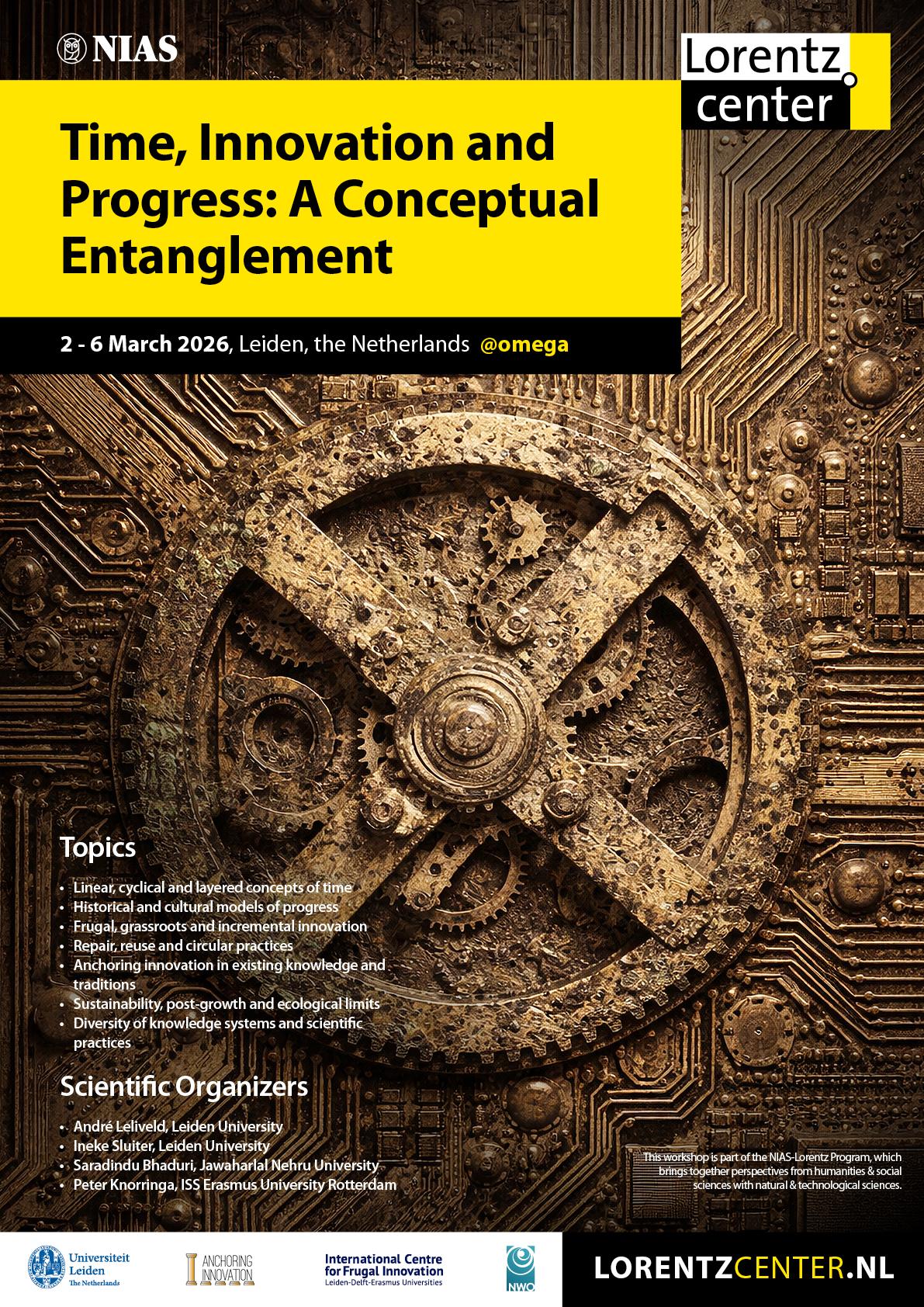
Below it appears a modern microchip, representing contemporary digital technologies. Rather than placing past and present in opposition, the visual aims to show integration and layering. The antique mechanism is not presented as something behind or separate from modern technology. Instead, it is embedded within a contemporary microchip structure. Different (technological) eras coexisting within the same system.
The image invites us to think about innovation in non-linear and layered ways, where historical knowledge remains active within contemporary technologies. Innovation does not simply replace what came before. It often builds upon deeper historical layers of knowledge, techniques and ways of understanding time.
FUN FACT:
The Antikythera mechanism was almost certainly not used as a practical technological tool. It may have been placed in a temple to inspire wonder, or used as a sophisticated conversation piece. Something to impress. In that sense, even this ancient “technology” was as much about meaning and perception as it was about function.