



The photo showed a fisherman on the Brahmaputra, one of the great rivers of northeastern India. Mountains behind him, morning light on the water, the kind of image that makes you want to be there.
Someone in the chat wrote exactly that: "peaceful, take me there." Someone else said it out loud: beautiful, but you don't really know what's behind it.
Bibhuti Ranjan Bhattacharyya, Assistant Professor at IIT Roorkee's Department of Design, let both reactions sit for a moment. Then he pointed to what neither of them had mentioned. The fisherman has no safety equipment. The river is enormous. If something goes wrong, his life is at risk. There are better tools available. He is not using them. And until you ask why, you cannot design anything useful for him.
What You Don't See
Bibhuti showed a second photo, this one of a traditional cooking fire inside a home in rural India. A participant from India recognised it immediately. One room for cooking, sleeping, studying and everything else. The smoke from the fire fills the space. Everyone in the room inhales it too, every day, as a matter of course.
“Could they not cook outside, to keep the smoke out?”, someone asked. In theory, she said. But in many slum areas, the space directly outside the door is someone else's room. There is nowhere to go.
Modern cookstoves exist and are available on the market. Why, Bibhuti asked the group, do people still rely on the traditional fire?
Affordability, someone said. Habit, said another.
Both right, Bibhuti said. But not the whole picture. Households in this region can have fifteen or twenty members. The cookstoves on the market do not fit that scale. Maintenance is a problem too: if something breaks, there is often nobody nearby to fix it. And then there is something harder to measure. People who had switched to modern stoves reported that the food tasted different. Whether that is psychological or not, he said, does not matter. It is a reason people do not switch, and if you are designing something for them, you have to know that.
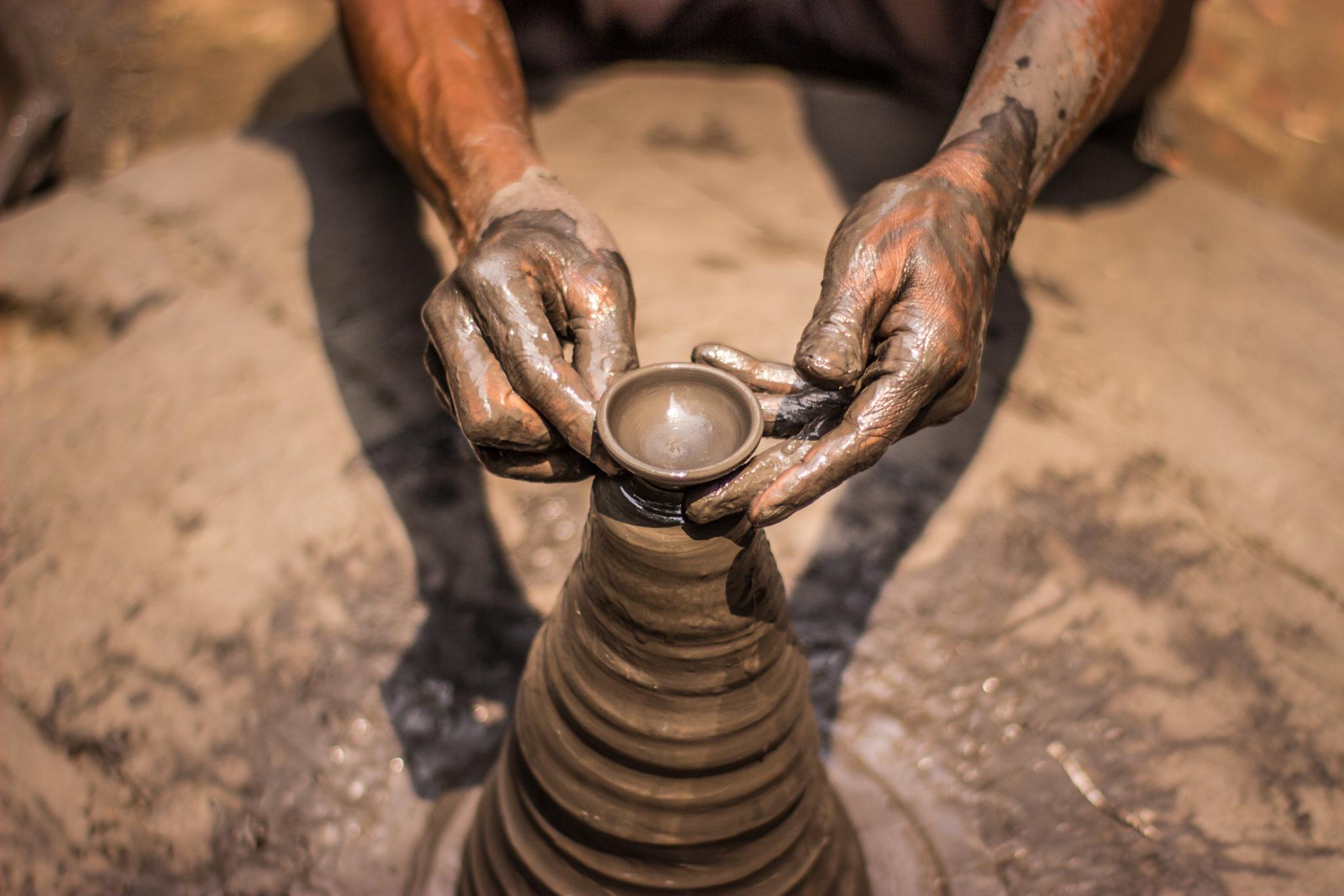
An NGO in Assam tried something. They kept the traditional cooking process almost exactly as it was, but added one thing: a chimney to carry the smoke outside. A participant guessed the material correctly from the photo: clay. Bibhuti asked her, “why clay?”. Because it is cheap, locally available and fireproof, she said.
All of that is true, he added. But there was another reason. The cluster where the NGO was working already had potters. People who work with clay every day, who know how to shape it, repair it, replace it. If the chimney breaks, the neighbour can fix it. That is not a side detail. That is the ecosystem. And building the ecosystem is as much part of the design as the object itself.
Who Builds the Technology and Why
From the chat, Hemant Kumar, who had led Monday's session, put a question into the conversation: why is a multinational company like GE designing this kind of technology?
It is a fair question, Bibhuti said. And the answer matters, because it tells you something about what kind of frugal innovation you are looking at.
There are two kinds. When a large company like GE designs for a resource-constrained market, the underlying logic is commercial: an underserved population is also an untapped market. The frugality is real, but it is driven by scale and profit margin. When a grassroots innovator or an NGO does the same thing, the underlying logic is different: there is a problem, and we want to solve it. Both produce frugal innovation. The results can look similar. But the process, and often the outcome for the community, is different.
The GE MAC 400 ECG machine illustrates the first. The original was built for hospitals: large, dependent on stable electricity, useless in rural India where power cuts out and dust gets into everything. The redesign was battery-powered and small enough for a nurse to carry to a patient's home. For the printer, the design team modelled it on the ones used at Indian bus terminals, the only printers in the country already proven to work in dust. The price dropped from ten thousand dollars to one thousand.
Bibhuti asked the group if anyone knew the Jaipur Foot. A participant from India did. A prosthetic leg made from rubber instead of metal: the material choice was not only about cost. Rubber can be worked by roadside cobblers, the people who repair shoes and sandals in village markets across India. By choosing a material that local artisans already understood, the designers built an entire manufacturing and maintenance ecosystem into the product from the start. The same principle as the clay chimney.
Designing With, Not For
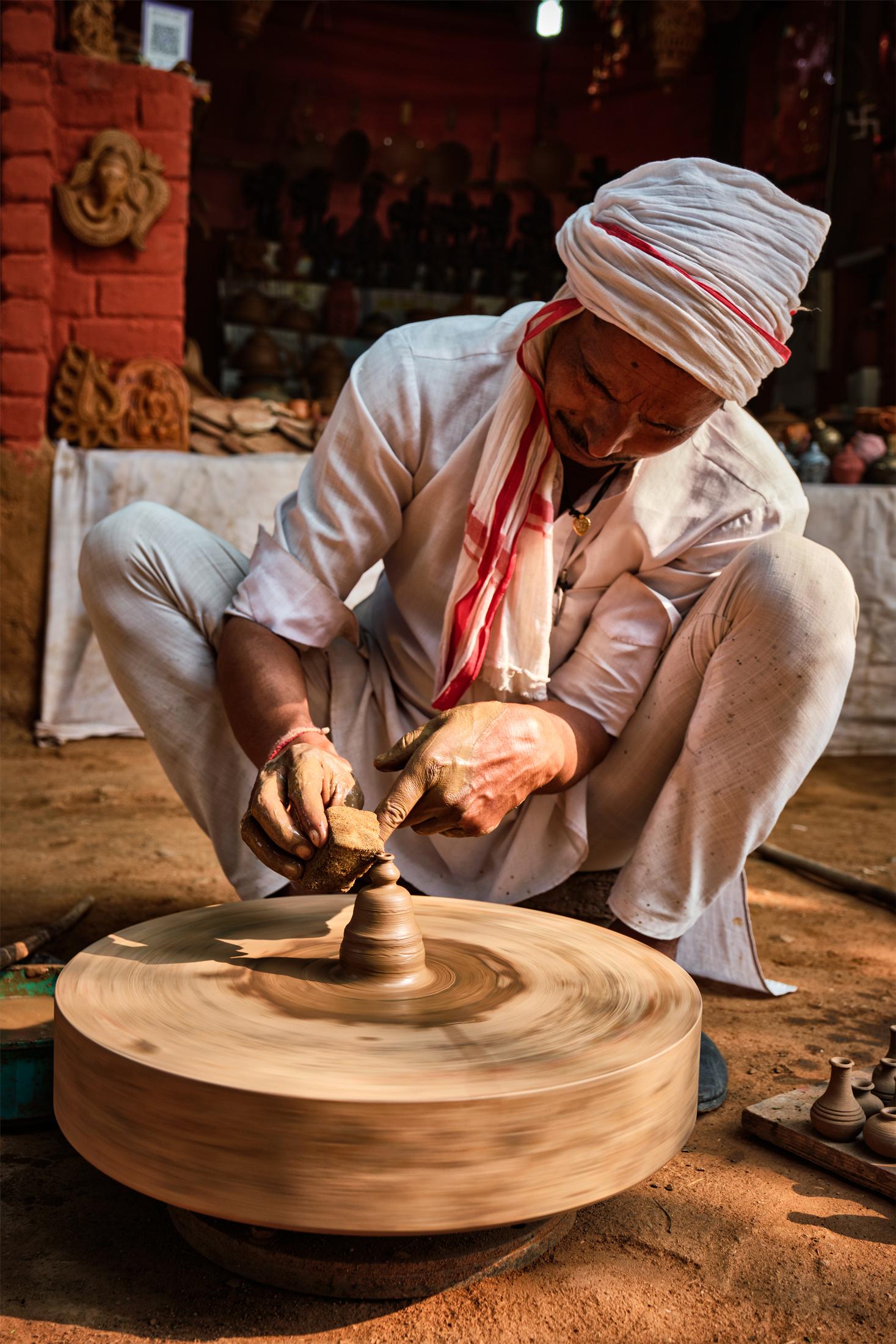
The case Bibhuti had developed most extensively himself was a pottery wheel for artisans in India. Potters work ten to twelve hours a day bent over a wheel at ground level, and over years that posture causes serious back and joint problems. A pedal-powered wheel had already been tested in one cluster of artisans with positive results: productive, ergonomically better, well received.
The same wheel was then tested in a second cluster, this one predominantly female. Two problems emerged.
- The first was technical. Women in the region wear a traditional two-piece dress, and the lower piece got caught in the pedal mechanism. That was solvable with a redesign.
- The second was not technical. When women operated the pedal, their leg movement exposed them in a way that was socially unacceptable in their community. Not a flaw in the engineering. Not a financial barrier. A problem that had never come up in the first cluster, because the first cluster had been all men. It only became visible because Bibhuti and his team had stayed close enough to the community, and long enough, to hear it.
The solution came from the artisans themselves. They suggested designing the mechanism like a sewing machine, something they already knew and trusted, and that kept the body in a different position. The team went back to the drawing board.
Then came production. No large manufacturer wanted to take it on: the market was too small for their scale. So the team worked with informal local fabricators instead. One of them couldn't make the gears the original design called for, but could make something different. The team tested it, it worked, and they adjusted the design accordingly. As Bibhuti pointed out, that adjustment contained its own lesson: sometimes you have to redesign your product around the manufacturing capability available, not the other way around.
There was no patent, no royalty, no formal licensing agreement. Just a memorandum of understanding built on trust: here is the design, make it for the community, and let us know if anything ever needs to change. The machine was designed to work for both male and female artisans. Thousands of weavers are now using it.
A participant listening in offered a distinction. There is a difference, she said, between consultation and capacitation. Consultation means going to people, collecting their input, and adjusting. Capacitation means putting the users on the design team itself, so their knowledge shapes the process from the inside. More demanding, but it produces better products, and also training and ownership.
Bibhuti agreed. The sewing machine suggestion had not come from a survey or a feedback form. It came from a conversation that was only possible because the team had been there long enough to earn it.
When It Fails
Not every case went that way.
Women in another community in northeastern India cut betel nuts by hand as part of a traditional cottage industry. The work is skilled but dangerous: a survey found that finger injuries were happening every week, taken for granted as part of the job.
Bibhuti's team designed a pedal-powered cutting system that would be safer and more productive. The engineering worked. The field test was successful. But when it came time to transfer the technology to the community, the women did not want it. They had been doing this work by hand their whole lives. Moving to foot power felt wrong. Too different. Too unfamiliar.
The team had not spent enough time understanding how deeply embedded the hand motion was in how the work felt. They went back and redesigned. The new version looked almost identical to the traditional process, hand-powered and manual, with one change: a guard that kept fingers away from the blade. Productivity stayed the same. Finger injuries stopped.
Sometimes frugal innovation means accepting that people are not going to change how they work, and designing around that instead.
Wealth from Waste
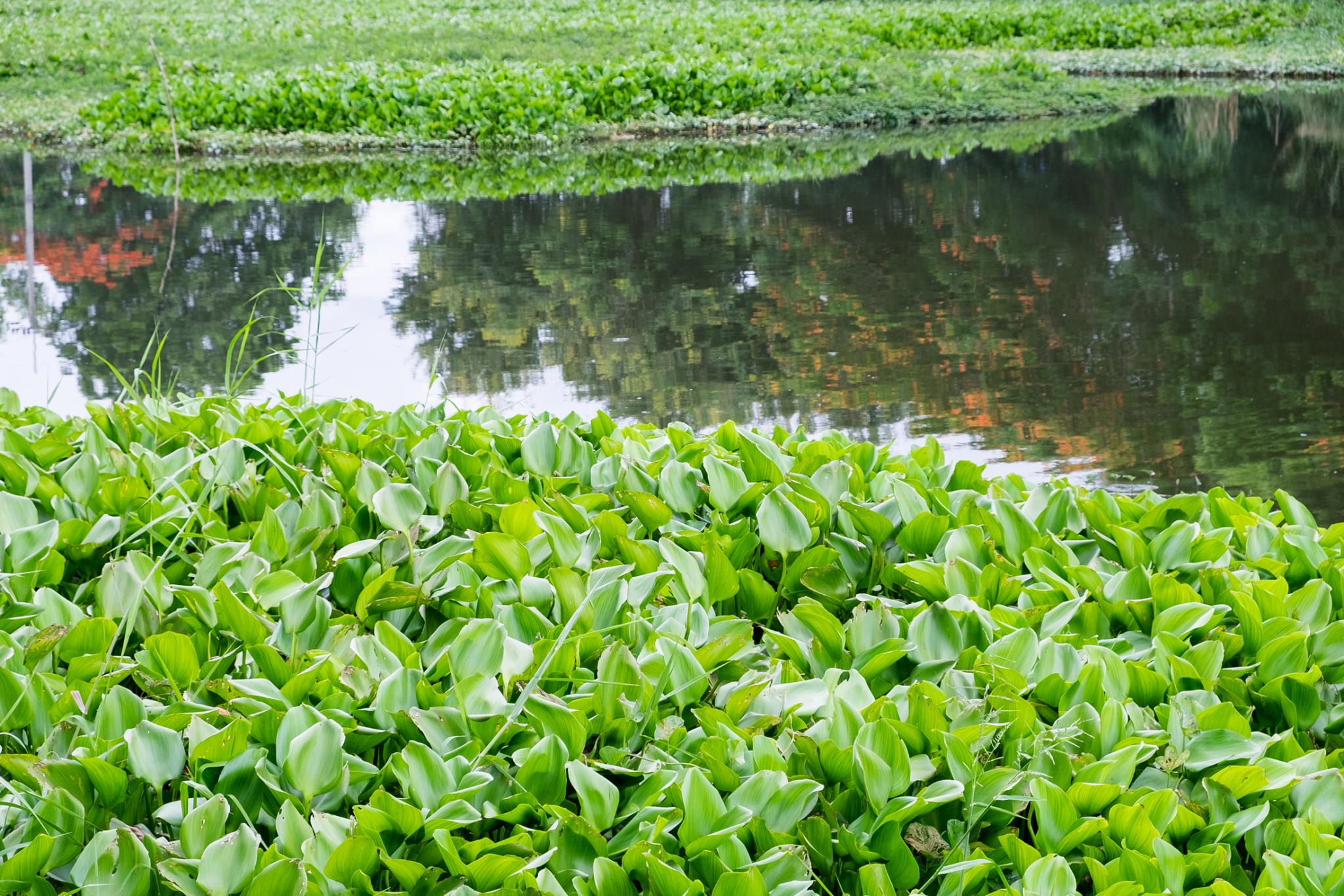
Toward the end of the session, Bibhuti put an open question to the group: water hyacinth, an invasive plant that spreads across water bodies in India and much of the world, blocking sunlight, destroying aquatic ecosystems, devastating fishing communities. How would you address this frugally?
Madi mentioned that South Africa had introduced a tiny insect that kills the plant. It worked, though biological interventions always make her nervous about unintended effects further down the line.
A participant from Ghana introduced someone into the conversation: a young Kenyan innovator named Joseph Nguthiru, who had turned water hyacinth into biodegradable bags and seedling planters. Fishermen whose waters had been choked by the plant were now earning additional income harvesting it. Another participant confirmed his name and added that his company, HyaPak, produced a home-compostable alternative to the plastic sachets ubiquitous across West Africa.
Bibhuti had not known about either of these when he asked the question. At IIT Roorkee, his team had been working on extracting fibre from the plant's stem. They had already succeeded in replacing the plastic in doll hair with water hyacinth fibre, keeping its natural colour. The harder challenge was turning it into textile fabric: pure water hyacinth cloth was not yet strong enough, but mixed with cotton the results were promising. A PhD student at the institute was exploring what else the fibre could become.
Madi looked at the three people who had each independently brought something to this question and said it would be nice if they explored it together, and if something that came out of VOICE was a journal article.
What the Groups Built
Near the end of the session, Bibhuti and Madi sent the group into four breakout rooms with a task: identify a problem from your own local context, something you and your groupmates could relate to across different countries, and see how far you could get toward a frugal solution in twenty minutes. The groups were mixed deliberately, not organised by country or domain. Madi added one instruction: see if you can find something that all of you can relate to, then see to what extent you can find a solution together.
The first group, with participants from the Netherlands and India, proposed a solution for elderly people who struggle to travel independently: communal benches next to bus stops with a sign indicating where someone wants to go, and passing drivers offering a lift. Not a new idea, but simple and replicable almost anywhere. Bibhuti encouraged them to develop it further.
The second group started from the flooding devastating cities like Lagos, Accra and Lomé, largely because plastic sachets clog drainage systems. Their proposal: collect sachets in exchange for a discount on locally made slippers produced from the same material. Bibhuti pushed on the economics. Sachets are light; how do you make the incentive financially viable? The response was ready: people drink six sachets of water a day in these markets. The volume adds up quickly.
The third group presented two cases from India. The tuk-tuk, a three-wheeled motorcycle carrying three passengers instead of two, navigating smaller roads where cars cannot go, as a response to urban congestion. And a clay water pot with a tap, keeping water cool without electricity. Then one of them asked the question that had been building all session: what is actually the difference between jugaad and frugal innovation?
Bibhuti's answer was direct. Jugaad is what the formal sector calls a workaround when it does not want to take it seriously. Something improvised. Something lesser. Frugal innovation is a philosophy: low cost matters, but so does the ecosystem, the user, the maintenance, the social context. It is not about cutting corners. It is about designing for the full reality of a situation.
The fourth group had been grappling with flooding in Vietnam, where street markets run by elderly people from the fronts of their homes become unusable when it rains heavily. Their most promising idea: physically enclosing the selling areas with drainage out. Cost was the sticking point, and they suggested advertising or government support. In twenty minutes, they summed it up, you can see why other people struggle with these same questions for years.
Madi closed the exercise by saying that experiencing that complexity was the whole point. Then she asked Bibhuti to wrap up.
Frugal innovation is not only about cost, he said. Cost matters, but so do all the other factors. The chimney, the ECG, the pottery wheel, the betel nut cutter, the water hyacinth: in every case, the object itself was only part of it. Who makes it. Who repairs it. Who was actually in the room when the decisions were made, and whether they were asked or simply observed.
The question of where jugaad ends and frugal innovation begins stayed open. Once this whole course is finished, Bibhuti said, hopefully you will have a better answer. Madi agreed. They would keep coming back to it.