
On Friday March 6, Prof. Robbert Dijkgraaf will give a public lecture in Leiden on the future of science and innovation. The lecture is part of the Lorentz Center workshop Time, Innovation and Progress and is open to all interested.
Registration is required. Please secure your place via the registration link.
The lecture connects to the themes of the workshop, which explores how different conceptions of time shape ideas about innovation and progress. Together, these discussions aim to contribute to a more diverse and context-sensitive understanding of the role of science in society.
Abstract
Science is in the midst of a profound transition, caught between accelerating technological change and mounting political pressures, while the world urgently needs innovation pathways toward solutions to grand societal challenges. This is the moment to reflect on the processes of research and innovation themselves, and to ask whether our dominant frameworks are adequate to the task. The linear, growth-oriented model of innovation, rooted in a specifically Western conception of progress and time, may be too narrow to capture the full diversity of how human societies have always created, adapted, and renewed knowledge. A new social compact between science and society calls for a broader, more inclusive understanding of innovation. One that embraces diverse knowledge cultures, transcends disciplinary and cultural boundaries, and positions science as a global public good.
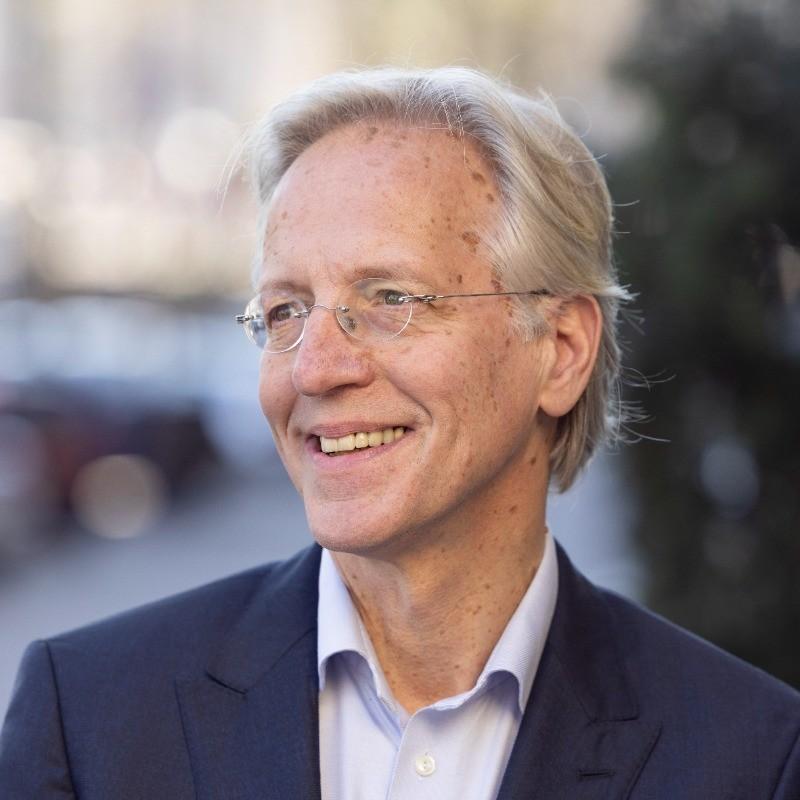 Robbert Dijkgraaf is President-Elect of the International Science Council, the most comprehensive organization representing the global science community, and a Distinguished University Professor at the University of Amsterdam. He is a mathematical physicist and academic leader who recently served as Minister of Education, Culture and Science of the Netherlands and director of the Institute for Advanced Study in Princeton.